Cantastoriememorie · emozioni · tradizioni Torna ai racconti

Fiaba contemporanea · 8 min di lettura

Il peso del ghiaccio
e la promessa del sole

A volte la primavera non arriva da sola. Bisogna riconoscere il freddo, condividere il peso e cominciare a costruire un ponte.

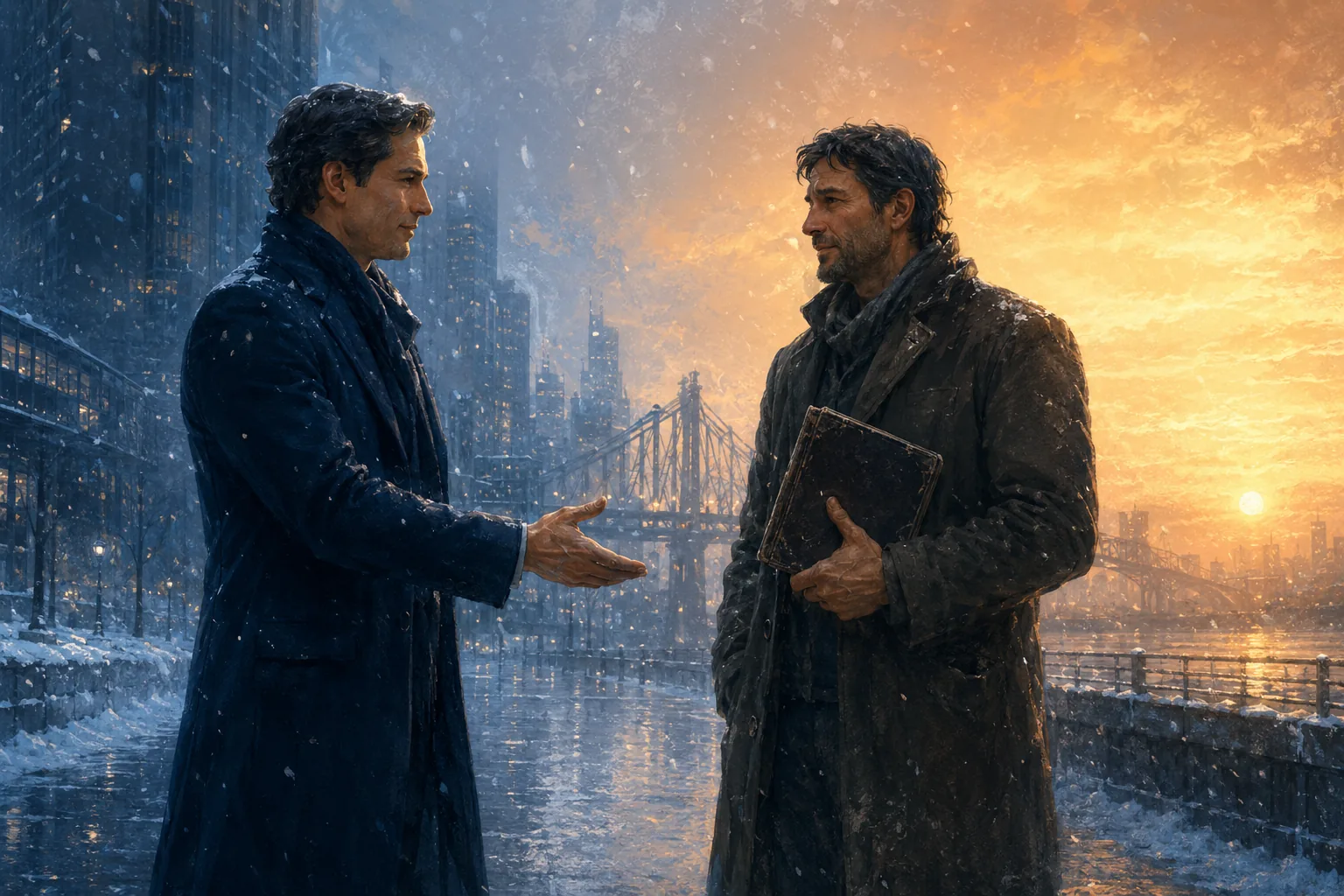
Vittorio e Lorenzo si incontrano in una città innevata, tra il gelo e la luce del sole
Gennaio
che impara a sciogliersi

Ascolta la storia

La lettura vocale non è disponibile in questo browser

Video narrativo

Il peso del ghiaccio e la promessa del sole

Guarda il racconto in formato cinematografico, con immagini animate, musica di sottofondo e parole da seguire lungo il cammino.

01

Il gelo della città

Quell'inverno il freddo arrivò prima del calendario. Si infilò nelle maniche dei cappotti, nelle fessure dei portoni e perfino nelle parole della gente, che diventavano brevi come fiocchi di neve prima di sciogliersi a terra.

Vittorio Moretti lo sentiva anche dietro i vetri dell'auto. Ogni mattina attraversava la città per raggiungere il grattacielo dove dirigeva una grande società. Aveva un ufficio all'ultimo piano, una scrivania di legno scuro e un telefono che non smetteva mai di squillare. Eppure, quando guardava le strade dall'alto, gli sembrava di vedere soltanto persone lontane.

Da mesi le sue giornate erano piene di decisioni e vuote di ascolto. Firmava contratti, risolveva problemi, aumentava numeri. Ma non ricordava più l'ultima volta in cui qualcuno gli aveva chiesto come stava aspettando davvero la risposta.

La città, intanto, continuava a gelare. Sotto il cavalcavia della stazione, dove il vento passava come un coltello, dormivano alcune persone senza una casa. Vittorio le vedeva ogni giorno dal finestrino. All'inizio abbassava gli occhi. Poi cominciò a rallentare.

02

Il taccuino di Lorenzo

Tra quelle persone c'era Lorenzo. Aveva una barba bianca agli angoli del viso, mani sottili e un vecchio taccuino rilegato in pelle. Non lo apriva per contare i giorni. Lo apriva per disegnare.

Disegnava ponti: ponti di pietra, ponti di ferro, ponti sospesi sopra fiumi immaginari. Disegnava archi, travi e piccoli passaggi coperti che proteggevano i viandanti dalla pioggia. Sulle ultime pagine aveva tracciato una casa luminosa, con molte finestre e una porta abbastanza larga da non lasciare nessuno fuori.

«Un progetto?» domandò Vittorio una mattina, fermandosi accanto al cavalcavia.

Lorenzo alzò lo sguardo. «Un ricordo. E forse un progetto. Le due cose si somigliano: entrambe cercano un posto dove stare.»

Vittorio seppe allora che Lorenzo era stato ingegnere. Aveva progettato strade e strutture in molte città, finché una lunga stagione difficile gli aveva tolto il lavoro, la casa e, un poco alla volta, la fiducia negli altri. Non aveva perso la capacità di costruire. Aveva perso il luogo in cui farlo.

«Il ghiaccio non pesa soltanto sulle spalle» disse Lorenzo. «A volte si posa sulle parole che non riusciamo più a dire.»

Vittorio avrebbe potuto lasciargli del denaro e ripartire. Era il gesto più semplice: rapido, pulito, senza domande. Invece quella mattina rimase. Chiese come si chiamava. Chiese che cosa avesse mangiato. Chiese se c'era un posto dove potesse ripararsi dal freddo.

Lorenzo rispose senza abbassare gli occhi. «C'è sempre un posto. Non sempre è una casa.»

03

Il primo passo

Il giorno dopo Vittorio tornò con una coperta, del pane caldo e un quaderno nuovo. Lorenzo osservò il quaderno, poi la coperta, infine il volto dell'uomo.

«Non mi serve un quaderno nuovo» disse.

«Lo so. Ma quello vecchio ha ancora pagine da riempire.»

Per la prima volta Lorenzo sorrise. Non era un sorriso grande. Era una piccola crepa nel ghiaccio.

Vittorio scoprì che aiutare non significava arrivare con una soluzione già pronta. Significava sedersi accanto a qualcuno abbastanza a lungo da capire quale fosse il suo primo passo. Lorenzo aveva bisogno di un documento, di un medico, di un colloquio e di un luogo in cui poter dormire senza difendere ogni notte il proprio zaino. Aveva bisogno di tempo, soprattutto.

Vittorio cominciò a telefonare. Non chiamò soltanto i suoi collaboratori più importanti. Chiamò una volontaria del quartiere, un centro di accoglienza, un'officina che cercava una persona capace di leggere un disegno tecnico. Ogni telefonata apriva una porta piccola. Nessuna porta, da sola, bastava. Insieme, però, cominciavano a formare un corridoio.

04

La casa dei passi lenti

Il centro si chiamava Casa dei Passi Lenti. Non era un palazzo nuovo né un luogo perfetto. Aveva muri da ridipingere, termosifoni capricciosi e una cucina troppo piccola per tutte le persone che avrebbero voluto sedersi a tavola. Ma aveva una regola: nessuno veniva trattato come un problema da spostare.

Lorenzo vi entrò in febbraio. Nei primi giorni parlava poco e teneva il taccuino vicino al petto. Poi cominciò ad aggiustare una mensola, a controllare una finestra, a spiegare ai ragazzi del quartiere perché un arco regge meglio di una linea diritta. Le sue mani ricordavano ciò che la paura aveva provato a cancellare.

Vittorio passava ogni sera. A volte portava materiali, altre volte soltanto il proprio silenzio. Seduto al tavolo della cucina, si accorse che nessuno gli chiedeva di essere indispensabile. Gli chiedevano di esserci.

Una sera confessò a Lorenzo di sentirsi stanco da anni. Aveva costruito una vita senza accorgersi che mancavano le finestre.

«Allora non devi abbatterla» rispose Lorenzo. «Devi cominciare a far entrare luce.»

05

Il ponte incompiuto

In primavera, il comune affidò alla Casa dei Passi Lenti un vecchio passaggio pedonale che attraversava il canale a nord della città. Il ponte era stato chiuso da anni. Le assi erano marce, le ringhiere arrugginite e nessuno ricordava più dove conducesse.

Lorenzo aprì il suo taccuino. Il progetto occupava una pagina intera: un ponte semplice, con corrimano bassi e lampade calde, costruito perché potessero attraversarlo anche le persone più stanche.

«Lo faremo insieme» disse Vittorio.

Non fu facile. Mancavano materiali, tempo e fiducia. Alcuni giorni pioveva. Altri giorni qualcuno non si presentava perché aveva avuto paura di ricominciare. Ma ogni volta il gruppo tornava al ponte. Una ragazza carteggiava il legno. Un muratore insegnava a usare gli attrezzi. I bambini dipingevano piccole strisce dorate sulle travi. Vittorio imparò a portare tavole senza impartire ordini.

Quando una parte della struttura cedette, Lorenzo rimase immobile a lungo. Guardò il ponte, poi il taccuino. Vittorio gli si avvicinò, ma non disse che sarebbe andato tutto bene.

«Possiamo rifarlo» disse soltanto.

Lorenzo annuì. Quel giorno capì che una ricostruzione non è un ritorno al punto di partenza. È la scelta di riprovare con le mani che si hanno, insieme alle persone che sono rimaste.

06

La promessa del sole

A luglio il ponte fu riaperto. Il sole scendeva dietro i palazzi e il canale raccoglieva riflessi color miele. Lorenzo attraversò per primo, con il taccuino sotto il braccio. Dall'altra parte lo aspettavano i ragazzi della Casa dei Passi Lenti, ognuno con una piccola lampada.

Vittorio arrivò in ritardo, ancora con la giacca dell'ufficio. Si fermò davanti alla prima tavola di legno e riconobbe le proprie mani: non erano più mani che indicavano la strada agli altri. Erano mani che avevano imparato a sorreggerla.

Lorenzo gli porse il taccuino. Nell'ultima pagina aveva disegnato due figure sul ponte. Una portava una lanterna. L'altra teneva aperta una porta. Sopra di loro, il sole sembrava nascere proprio dall'arco della struttura.

«È finito?» chiese Vittorio.

«No» rispose Lorenzo. «Adesso può cominciare a servire.»

Da allora il ponte rimase acceso ogni sera. Non per ricordare il freddo, ma per dire a chiunque passasse di lì che un peso condiviso diventa più leggero. Lorenzo tornò a progettare. Vittorio lasciò l'ufficio dell'ultimo piano e dedicò parte del suo tempo alla Casa dei Passi Lenti. Nessuno dei due dimenticò l'inverno. Dimenticarlo sarebbe stato facile. Trasformarlo, invece, richiedeva cura.

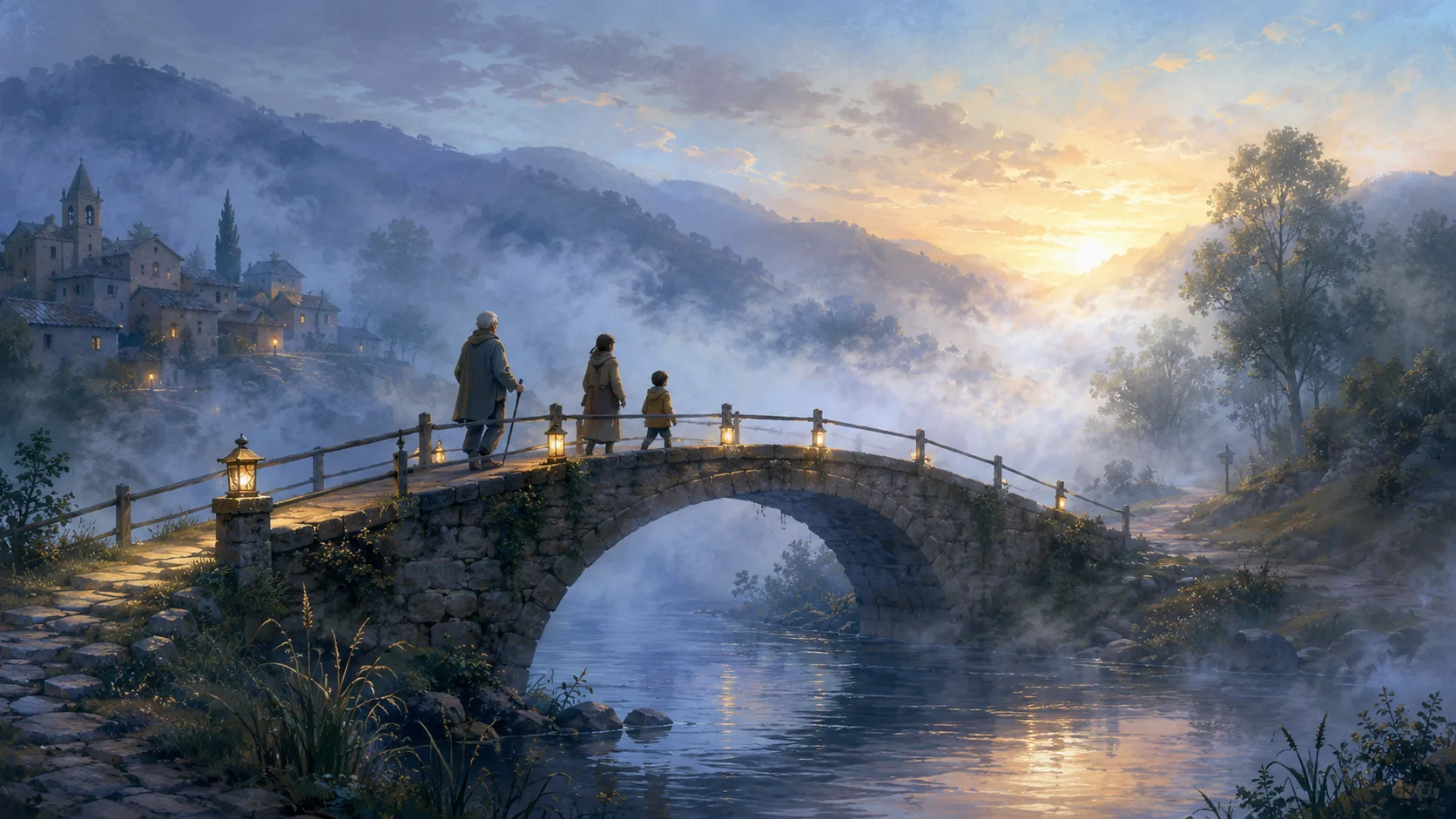
Se vuoi restare tra coraggio e incontro, continua con Il ponte nella nebbia.

Si dice che, nelle mattine d'inverno, una sottile lastra di ghiaccio compaia ancora sulle assi del ponte. Ma appena qualcuno posa una mano accanto a quella di un altro, il ghiaccio si scioglie.

Perché il sole non promette di cancellare il freddo. Promette che nessuno dovrà portarlo da solo.
English translation

The Weight of Ice and the Promise of the Sun

Sometimes spring does not come on its own. We must recognize the cold, share the weight, and begin to build a bridge.

01

The city's frost

That winter, the cold arrived before the calendar. It slipped into coat sleeves, doorways, and even people's words, which grew as short as snowflakes before melting onto the ground.

Vittorio Moretti felt it even behind the car windows. Every morning he crossed the city to reach the skyscraper where he ran a large company. He had an office on the top floor, a dark wooden desk, and a phone that never stopped ringing. Yet when he looked down at the streets, all he seemed to see were distant people.

For months, his days had been full of decisions and empty of listening. He signed contracts, solved problems, and grew numbers. But he could no longer remember the last time someone had asked how he was and truly waited for the answer.

Meanwhile, the city kept freezing. Under the station overpass, where the wind passed like a knife, several people without homes slept. Vittorio saw them every day through the car window. At first he lowered his eyes. Then he began to slow down.

02

Lorenzo's notebook

Among them was Lorenzo. He had a white beard at the corners of his face, slender hands, and an old leather-bound notebook. He did not open it to count the days. He opened it to draw.

He drew bridges: stone bridges, iron bridges, suspension bridges over imaginary rivers. He drew arches, beams, and small covered passages that protected travelers from the rain. On the last pages he had sketched a bright house, with many windows and a door wide enough to leave no one outside.

“A project?” Vittorio asked one morning, stopping beside the overpass.

Lorenzo looked up. “A memory. And perhaps a project. The two resemble each other: both are looking for a place to belong.”

Vittorio learned that Lorenzo had once been an engineer. He had designed roads and structures in many cities, until a long difficult season had taken away his job, his home, and, little by little, his trust in other people. He had not lost the ability to build. He had lost the place where he could do it.

“Ice does not weigh only on our shoulders,” Lorenzo said. “Sometimes it settles on the words we can no longer say.”

Vittorio could have left him some money and driven away. It was the simplest gesture: quick, clean, without questions. Instead, that morning he stayed. He asked his name. He asked what he had eaten. He asked whether there was a place where he could shelter from the cold.

“There is always a place,” Lorenzo replied without lowering his eyes. “It is not always a home.”

03

The first step

The next day Vittorio returned with a blanket, warm bread, and a new notebook. Lorenzo looked at the notebook, then at the blanket, and finally at the man's face.

“I do not need a new notebook,” he said.

“I know. But the old one still has pages to fill.”

For the first time Lorenzo smiled. It was not a big smile. It was a small crack in the ice.

Vittorio discovered that helping did not mean arriving with a ready-made solution. It meant sitting beside someone long enough to understand what their first step might be. Lorenzo needed an identity document, a doctor, an interview, and a place where he could sleep without defending his backpack every night. Above all, he needed time.

Vittorio began making calls. He did not call only his most important associates. He called a neighborhood volunteer, a shelter, and a workshop looking for someone who could read a technical drawing. Every call opened a small door. No door was enough on its own. Together, however, they began to form a corridor.

04

The house of slow steps

The center was called the House of Slow Steps. It was not a new building or a perfect place. It had walls that needed repainting, temperamental radiators, and a kitchen too small for all the people who wanted to sit at the table. But it had one rule: no one was treated as a problem to be moved elsewhere.

Lorenzo entered it in February. During the first few days he spoke little and kept the notebook close to his chest. Then he began repairing a shelf, checking a window, and explaining to neighborhood children why an arch carries weight better than a straight line. His hands remembered what fear had tried to erase.

Vittorio came every evening. Sometimes he brought materials; other times, only his silence. Sitting at the kitchen table, he realized that no one asked him to be indispensable. They asked him to be there.

One evening he confessed to Lorenzo that he had felt tired for years. He had built a life without realizing that it was missing windows.

“Then you must not tear it down,” Lorenzo replied. “You must begin to let light in.”

05

The unfinished bridge

In spring, the town council entrusted the House of Slow Steps with an old pedestrian crossing over the canal north of the city. The bridge had been closed for years. The boards were rotten, the railings rusted, and no one remembered where it led.

Lorenzo opened his notebook. The design filled an entire page: a simple bridge, with low handrails and warm lamps, built so that even the most tired people could cross it.

“We will do it together,” Vittorio said.

It was not easy. They lacked materials, time, and trust. Some days it rained. On other days someone did not show up because they were afraid to start again. But every time, the group returned to the bridge. A girl sanded the wood. A mason taught people how to use the tools. The children painted small golden stripes on the beams. Vittorio learned to carry boards without giving orders.

When part of the structure gave way, Lorenzo stood still for a long time. He looked at the bridge, then at the notebook. Vittorio came closer, but he did not say that everything would be fine.

“We can rebuild it,” he said simply.

Lorenzo nodded. That day he understood that rebuilding is not a return to the starting point. It is the choice to try again with the hands we have, together with the people who stayed.

06

The promise of the sun

In July the bridge reopened. The sun was setting behind the buildings, and the canal gathered honey-colored reflections. Lorenzo crossed first, the notebook under his arm. On the other side, the children from the House of Slow Steps waited for him, each carrying a small lamp.

Vittorio arrived late, still wearing his office jacket. He stopped before the first wooden board and recognized his own hands: they were no longer hands that pointed the way for others. They were hands that had learned to hold the way up.

Lorenzo handed him the notebook. On the last page he had drawn two figures on the bridge. One carried a lantern. The other held a door open. Above them, the sun seemed to rise from the bridge's arch itself.

“Is it finished?” Vittorio asked.

“No,” Lorenzo replied. “Now it can begin to serve.”

From then on, the bridge stayed lit every evening. Not to remember the cold, but to tell anyone who passed that a shared burden becomes lighter. Lorenzo returned to designing. Vittorio left the top-floor office and devoted part of his time to the House of Slow Steps. Neither of them forgot the winter. Forgetting it would have been easy. Transforming it, however, required care.

They say that on winter mornings a thin sheet of ice still appears on the bridge's boards. But as soon as someone places a hand beside another person's, the ice melts.

Because the sun does not promise to erase the cold. It promises that no one will have to carry it alone.

La tua impressione

Come hai trovato questa storia?

Lascia una valutazione da una a cinque stelle per aiutare altri lettori a scegliere il loro prossimo racconto.

Valuta Il Peso del Ghiaccio e la Promessa del Sole da una a cinque stelle

Scegli da una a cinque stelle.

La scelta viene ricordata su questo dispositivo.

Il viaggio continua

Altre storie da custodire

Scelti per te

Tre racconti vicini per tema, atmosfera e significato