Cantastoriememorie · emozioni · tradizioni Torna ai racconti

Fiaba · 8 min di lettura

La campana che chiamava le stelle

In un paese dove il cielo si era fatto vuoto, una bambina scopre che le parole gentili sanno trovare la strada fino alle stelle.

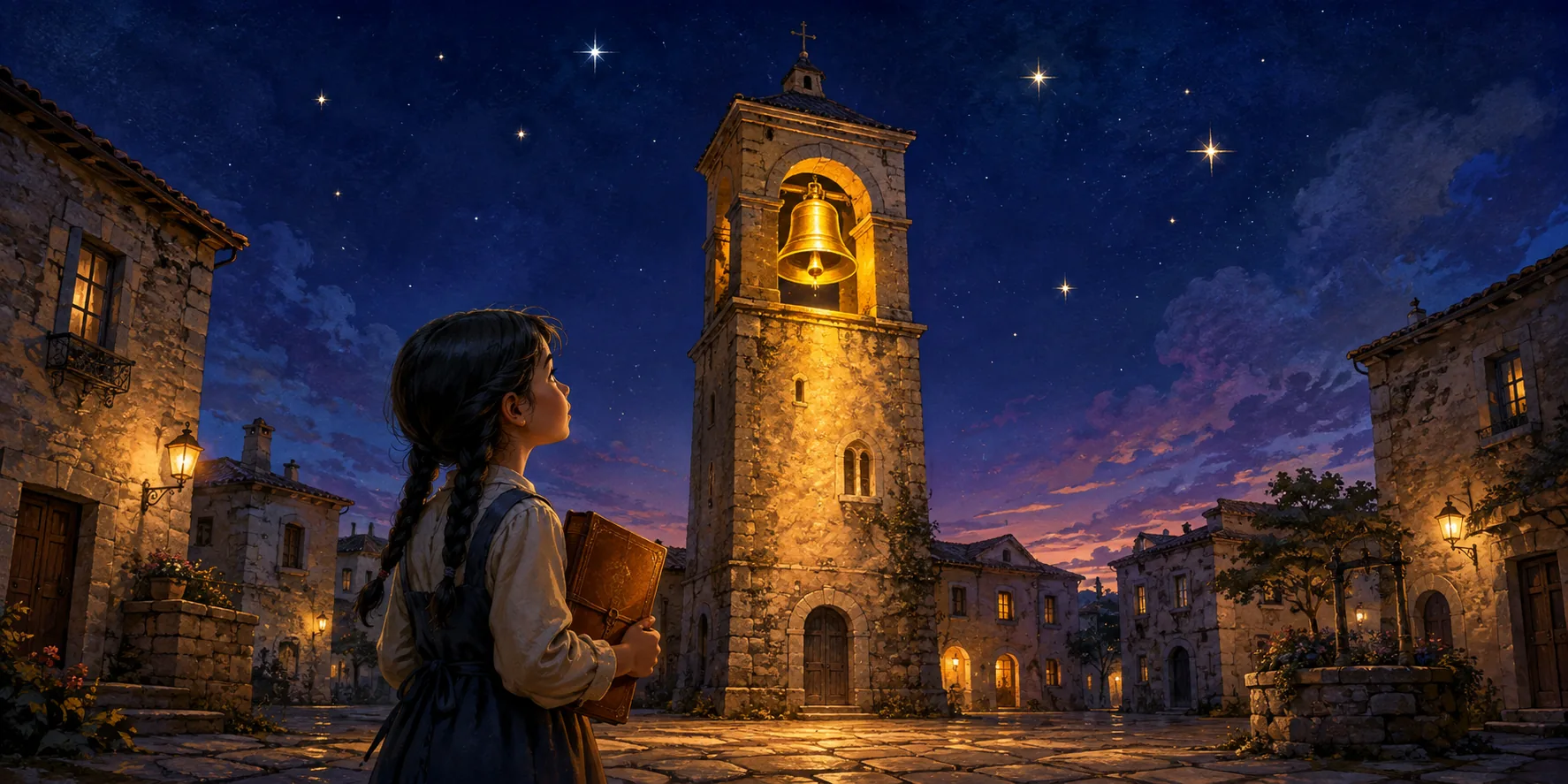
Una bambina con un quaderno osserva una campana dorata mentre le stelle tornano a brillare
Una parola gentile
può riaprire il cielo

Ascolta la storia

La lettura vocale non è disponibile in questo browser

Video narrativo

La campana che chiamava le stelle

Guarda la fiaba in formato illustrato e scopri come le parole sincere di Nora possano riaccendere le stelle sopra Borgolume.

01

Il paese senza stelle

C'era una volta Borgolume, un paese raccolto ai piedi di una collina, dove le case avevano persiane verdi e i comignoli fumavano come piccoli camini delle fiabe.

Per molto tempo, ogni sera, gli abitanti uscivano sulla piazza per guardare il cielo. Le stelle erano così numerose che sembravano briciole d'oro sparse sopra il mondo. I bambini le contavano, i vecchi davano loro dei nomi e chi tornava tardi dal lavoro trovava la strada seguendo la più luminosa.

Poi, senza che nessuno sapesse dire quando, le stelle cominciarono a spegnersi. Prima ne mancò una soltanto. La sera dopo ne mancavano cinque. In capo a un mese, il cielo era diventato una grande stoffa blu e vuota.

Gli abitanti di Borgolume cercarono una spiegazione. Il fornaio disse che era colpa delle nuvole. Il mugnaio accusò il fumo dei camini. Il sindaco ordinò di lucidare le finestre, come se le stelle fossero rimaste fuori e aspettassero soltanto un vetro più pulito.

Nessuno si accorse della cosa più semplice: in paese le persone avevano smesso di ascoltarsi. Le parole uscivano in fretta, si urtavano nelle strade e cadevano a terra prima che qualcuno potesse raccoglierle.

02

Nora e il campanile

In una casa all'estremità del paese viveva Nora, una bambina con due trecce scure e un quaderno color rame. Nel quaderno non scriveva i compiti, perché quelli li teneva in ordine sul banco. Scriveva invece le parole che gli adulti dicevano senza accorgersi del loro peso.

Su una pagina aveva raccolto parole dure: «Dopo», «Non ho tempo», «Non importa». Su un'altra conservava le parole che nessuno aveva pronunciato: «Resta», «Ti ascolto», «Puoi riprovare».

Una sera, mentre attraversava la piazza, Nora sentì un suono leggerissimo. Non era proprio un tintinnio e non era ancora una musica. Sembrava il respiro di un metallo addormentato.

Il suono veniva dal vecchio campanile, chiuso da anni. Nora spinse la porta e salì la scala a chiocciola. In cima trovò una campana coperta di polvere. Non aveva corde, né batacchio, né iscrizioni visibili.

La bambina passò un dito sulla superficie e scoprì una frase incisa sotto la polvere:

«Suono quando una parola lascia luce a chi la riceve.»

Nora provò a spingere la campana. Niente. La colpì con una vecchia scopa. Niente. Le parlò come si parla a qualcuno che forse ha paura: «Se puoi, aiutaci». La campana rimase muta, ma una piccola scintilla apparve sul bordo e si spense subito.

«Non basta chiedere» disse una voce alle sue spalle.

Era Elio, il custode del campanile, un uomo magro con una giacca piena di tasche. In ogni tasca teneva un oggetto inutile: un bottone, una piuma, una chiave senza serratura. Diceva che le cose inutili, a volte, ricordano meglio ciò che conta.

03

La prima luce

«Che cosa dobbiamo fare?» domandò Nora.

Elio indicò il quaderno. «Le parole non si raccolgono soltanto. Bisogna restituirle a qualcuno.»

Nora scese dal campanile e andò dal fornaio. Lo trovò seduto davanti al forno spento, con le mani infarinate e lo sguardo stanco. Tutti gli chiedevano pane più caldo, più grande, più presto. Nessuno gli aveva domandato come stesse.

La bambina avrebbe voluto dire qualcosa di importante. Invece disse soltanto: «Grazie per il profumo che lasci ogni mattina nella strada».

Il fornaio la guardò a lungo. Poi sorrise in un modo che gli cambiò il viso. «Non me l'aveva mai detto nessuno» rispose.

Quella sera Nora tornò al campanile. Pronunciò la stessa frase verso la campana. Dal metallo uscì un suono piccolo ma limpido: din.

Nello stesso istante, sopra il tetto della scuola, comparve una stella. Era minuscola, ma abbastanza luminosa da farsi vedere da tutta la piazza.

Nora capì che la campana non obbediva alle parole belle. Obbediva alle parole vere, quelle che riconoscevano una luce già presente in qualcuno.

04

La piazza delle voci

Il giorno seguente Nora raccontò tutto agli abitanti di Borgolume. Alcuni risero. Il sindaco disse che una stella non era una prova sufficiente. Il mugnaio domandò se la campana sapesse anche far piovere.

Ma il fornaio si alzò in mezzo alla piazza e disse: «La bambina ha visto il mio lavoro. Io avevo dimenticato che qualcuno potesse accorgersene».

Quelle parole fecero cadere il silenzio. Non un silenzio vuoto, ma un silenzio che lascia posto a ciò che deve arrivare.

La vecchia Ada disse alla vicina: «Grazie per avermi aspettata tante volte davanti alla porta». Il mugnaio disse al ragazzo che portava i sacchi: «Hai imparato senza arrenderti». Il sindaco, dopo aver frugato a lungo nelle tasche, si rivolse alla figlia: «Mi dispiace per tutte le volte in cui ho risposto senza ascoltare».

Ogni parola raggiunse il campanile. Din. Din. Din.

Una stella comparve sopra il pozzo, un'altra dietro il campanile, una terza proprio sopra la casa di Nora. Il cielo non tornò pieno in una sola notte, ma nessuno ebbe più fretta. Gli abitanti avevano capito che anche la luce ha bisogno di tempo per essere riconosciuta.

05

La notte del vento

Quando mancavano soltanto sette stelle, arrivò un vento forte dalla collina. Spalancò le finestre, rovesciò le ceste e fece oscillare il campanile. La campana suonò da sola una volta, poi una seconda. Al terzo colpo, una crepa attraversò il suo fianco.

«Se si rompe, perderemo tutto!» gridò qualcuno.

Gli abitanti salirono insieme la scala a chiocciola. Ognuno aveva un consiglio diverso: legare la campana, riempire la crepa, chiamare qualcuno dalla città. Parlavano tutti nello stesso momento e il rumore diventava più forte del vento.

Nora si accorse che, in fondo alla stanza, un bambino piangeva. Era Teo, il figlio del mugnaio. Aveva paura del temporale e nessuno lo vedeva, perché tutti stavano cercando di salvare la campana.

Nora si sedette accanto a lui. Non gli disse che non c'era niente da temere. Non gli disse di essere coraggioso. Gli prese soltanto la mano e sussurrò: «Sono qui. Possiamo aspettare insieme».

Il vento continuò a scuotere le travi. Teo smise piano piano di piangere. Quando il suo respiro tornò regolare, la campana emise il suono più profondo che Nora avesse mai sentito.

Diiiiin.

La crepa si richiuse come una ruga cancellata dalla pioggia. Le sette stelle rimaste si accesero tutte insieme. Per un momento il cielo sembrò così vicino che Nora ebbe l'impressione di poterlo toccare.

06

Il segreto del cielo

Da quella notte, a Borgolume, nessuno parlò più della campana come di una macchina magica. La campana non aveva restituito le stelle. Aveva soltanto ricordato agli abitanti che il cielo non è qualcosa da possedere, ma qualcosa a cui fare spazio.

Il fornaio lasciò una sedia accanto al forno per chi aveva bisogno di riposare. Il mugnaio imparò a fare una domanda prima di dare un consiglio. Il sindaco aprì una stanza del municipio dove chiunque poteva parlare senza essere interrotto.

Nora continuò a scrivere nel suo quaderno. Le parole dure non sparirono del tutto: ogni tanto qualcuno aveva ancora fretta, paura o stanchezza. Ma accanto a ogni parola lasciata cadere, compariva qualcuno disposto a raccoglierla.

Quanto a Elio, il custode del campanile, un mattino consegnò a Nora la chiave della porta.

«Perché proprio a me?» chiese la bambina.

«Perché hai capito che ascoltare non significa avere sempre una risposta» disse lui. «A volte significa restare abbastanza vicini perché l'altro possa trovare la sua.»

Per custodire un’altra luce capace di raggiungere lontano, leggi anche Il Faro del Silenzio.

Da allora, ogni sera, gli abitanti di Borgolume guardavano le stelle in silenzio. E quando qualcuno pronunciava una parola gentile, la campana rispondeva da lontano.

Una parola gentile non fa rumore, ma sa trovare la strada fino al cielo.


English translation

The Bell That Called the Stars

In a village where the sky had grown empty, a girl discovers that kind words know how to find their way to the stars.

01

The village without stars

Once upon a time there was Borgolume, a village gathered at the foot of a hill, where the houses had green shutters and the chimneys smoked like little fairy-tale fireplaces.

For a long time, every evening, the inhabitants came out into the square to look at the sky. There were so many stars that they seemed like golden crumbs scattered over the world. The children counted them, the old people gave them names, and those returning late from work found their way by following the brightest one.

Then, without anyone knowing exactly when, the stars began to go out. First only one disappeared. The next evening five were missing. Within a month, the sky had become one great empty blue cloth.

The people of Borgolume searched for an explanation. The baker said it was the clouds' fault. The miller blamed the smoke from the chimneys. The mayor ordered everyone to polish their windows, as if the stars had remained outside and were only waiting for cleaner glass.

No one noticed the simplest thing: in the village, people had stopped listening to one another. Words came out too quickly, collided in the streets, and fell to the ground before anyone could pick them up.

02

Nora and the bell tower

In a house at the edge of the village lived Nora, a girl with two dark braids and a copper-colored notebook. She did not write her homework in it, because she kept that in order on her desk. Instead, she wrote down the words adults said without noticing their weight.

On one page she collected harsh words: “Later,” “I don't have time,” “It doesn't matter.” On another she kept the words no one had spoken: “Stay,” “I am listening,” “You can try again.”

One evening, while crossing the square, Nora heard a very light sound. It was not quite a tinkle and not yet music. It seemed like the breath of a sleeping piece of metal.

The sound came from the old bell tower, which had been closed for years. Nora pushed open the door and climbed the spiral staircase. At the top she found a bell covered in dust. It had no ropes, no clapper, and no visible inscription.

The girl ran a finger over its surface and discovered a sentence carved beneath the dust.

Nora tried to push the bell. Nothing. She struck it with an old broom. Nothing. She spoke to it as one speaks to someone who may be afraid: “If you can, help us.” The bell remained silent, but a tiny spark appeared on its rim and went out at once.

“Asking is not enough,” said a voice behind her.

It was Elio, the keeper of the bell tower, a thin man with a jacket full of pockets. In every pocket he carried a useless object: a button, a feather, a key with no lock. He said that useless things sometimes remember what matters better.

I ring when a word leaves light in the person who receives it.
03

The first light

“What do we have to do?” Nora asked.

Elio pointed to the notebook. “Words are not only collected. They must be returned to someone.”

Nora came down from the bell tower and went to the baker. She found him sitting in front of the cold oven, his hands covered in flour and his eyes tired. Everyone asked him for bread that was warmer, larger, faster. No one had asked how he was.

The girl wanted to say something important. Instead she simply said, “Thank you for the smell you leave in the street every morning.”

The baker looked at her for a long time. Then he smiled in a way that changed his face. “No one has ever said that to me,” he replied.

That evening Nora returned to the bell tower. She spoke the same sentence toward the bell. From the metal came a small but clear sound: ding.

At that very moment, above the school roof, a star appeared. It was tiny, but bright enough to be seen from the whole square.

Nora understood that the bell did not obey beautiful words. It obeyed true words, the ones that recognized a light already present in someone.

04

The square of voices

The next day Nora told the people of Borgolume everything. Some laughed. The mayor said that one star was not enough proof. The miller asked whether the bell could also make it rain.

But the baker stood in the middle of the square and said, “The girl saw my work. I had forgotten that anyone might notice it.”

Those words made the silence fall. Not an empty silence, but one that leaves room for what needs to arrive.

Old Ada said to her neighbor, “Thank you for waiting for me so many times by the door.” The miller said to the boy who carried the sacks, “You learned without giving up.” After searching through his pockets for a long time, the mayor turned to his daughter: “I am sorry for all the times I answered without listening.”

Every word reached the bell tower. Ding. Ding. Ding.

One star appeared above the well, another behind the bell tower, and a third right above Nora's house. The sky did not become full again in a single night, but no one was in a hurry anymore. The villagers had understood that light too needs time to be recognized.

05

The night of the wind

When only seven stars were missing, a strong wind arrived from the hill. It flung open the windows, overturned baskets, and made the bell tower sway. The bell rang once by itself, then a second time. On the third strike, a crack ran across its side.

“If it breaks, we will lose everything!” someone shouted.

The villagers climbed the spiral staircase together. Each had a different suggestion: tie up the bell, fill the crack, call someone from the city. They all spoke at once, and the noise became stronger than the wind.

Nora noticed a child crying at the back of the room. It was Teo, the miller's son. He was afraid of the storm and no one saw him, because everyone was trying to save the bell.

Nora sat beside him. She did not say there was nothing to fear. She did not tell him to be brave. She simply took his hand and whispered, “I am here. We can wait together.”

The wind continued to shake the beams. Teo slowly stopped crying. When his breathing became regular again, the bell made the deepest sound Nora had ever heard.

Diiiiing.

The crack closed like a wrinkle washed away by rain. All seven remaining stars lit up at once. For a moment the sky seemed so close that Nora felt she could touch it.

06

The secret of the sky

From that night on, no one in Borgolume spoke of the bell as a magical machine. The bell had not returned the stars. It had simply reminded the villagers that the sky is not something to possess, but something to make room for.

The baker left a chair beside the oven for anyone who needed to rest. The miller learned to ask a question before giving advice. The mayor opened a room in the town hall where anyone could speak without being interrupted.

Nora continued writing in her notebook. The harsh words did not disappear completely: sometimes someone was still hurried, afraid, or tired. But beside every word that fell, someone appeared who was willing to pick it up.

As for Elio, the keeper of the bell tower, one morning he handed Nora the key to the door.

“Why me?” the girl asked.

“Because you understand that listening does not mean always having an answer,” he said. “Sometimes it means staying close enough for the other person to find their own.”

From then on, every evening the people of Borgolume looked at the stars in silence. And whenever someone spoke a kind word, the bell answered from far away.

A kind word makes no noise, but it knows how to find its way to the sky.

La tua impressione

Come hai trovato questa storia?

Lascia una valutazione da una a cinque stelle per aiutare altri lettori a scegliere il loro prossimo racconto.

Valuta La campana che chiamava le stelle da una a cinque stelle

Scegli da una a cinque stelle.

La scelta viene ricordata su questo dispositivo.

Il viaggio continua

Altre storie da custodire

Scelti per te

Tre racconti vicini per tema, atmosfera e significato