Cantastoriememorie · emozioni · tradizioni Torna ai racconti

Fiaba · 7 min di lettura

Il ponte nella nebbia

In una valle divisa da una nebbia ostinata, due rive imparano che un ponte si attraversa senza fretta, ascoltando il passo di chi cammina accanto.

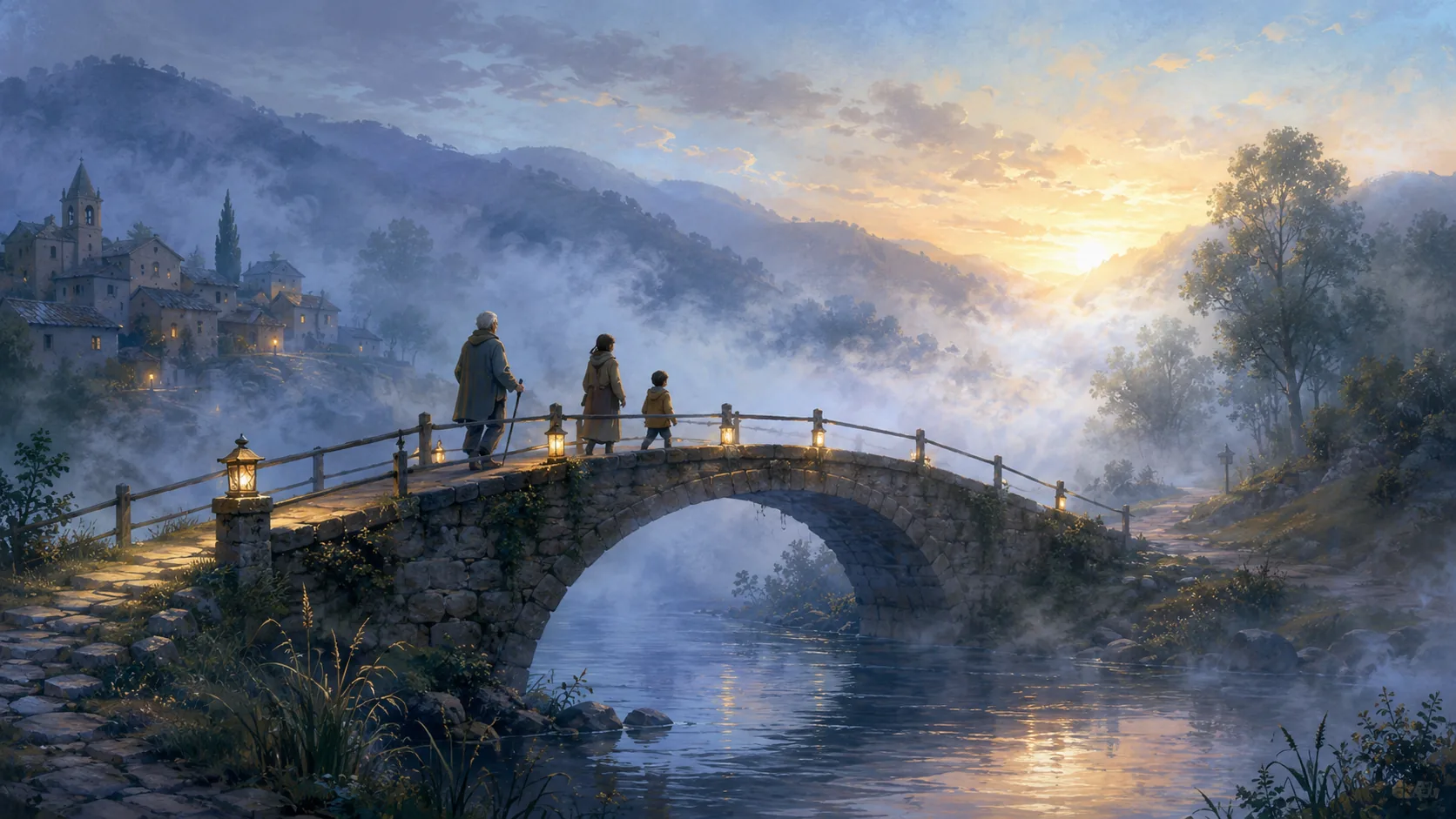
Un ponte antico nella nebbia dell'alba, con luci calde e figure che camminano insieme
Dove la distanza
diventa cammino

Ascolta la storia

La lettura vocale non è disponibile in questo browser

Video narrativo

Il ponte nella nebbia

Guarda la fiaba in formato illustrato e scopri come pazienza, gioco e ascolto possano costruire un ponte verso l'inclusione.

01

Le due rive

C'erano due paesi nella Valle del Salice: Pian del Vento, appoggiato alla collina, e Vallequieta, disteso accanto all'acqua. Tra loro scorreva un fiume largo e lento, attraversato da un vecchio ponte di pietra.

Il ponte aveva archi tondeggianti, una ringhiera di legno e pietre lisce per tutti gli anni in cui le persone lo avevano percorso. Un tempo univa i mercati, le feste e le famiglie delle due rive. Poi, un autunno, arrivò una nebbia così fitta che sembrò cancellare il centro del ponte.

Da allora, chi partiva da Pian del Vento vedeva soltanto tre o quattro passi davanti a sé. Chi veniva da Vallequieta vedeva gli stessi tre o quattro passi, ma nella direzione opposta. Nessuno sapeva dire dove finisse il ponte. Così la gente cominciò a raccontare che, dentro la nebbia, mancassero alcune pietre.

La verità era più semplice: le pietre c'erano ancora. Mancava il tempo di fermarsi ad aspettare che gli occhi imparassero a riconoscerle.

02

Mina e il primo gradino

In Pian del Vento viveva Mina, una bambina che sapeva ascoltare le cose prima che facessero rumore. Riconosceva il vento dal modo in cui muoveva le tende e il fiume dal respiro che lasciava sotto le finestre.

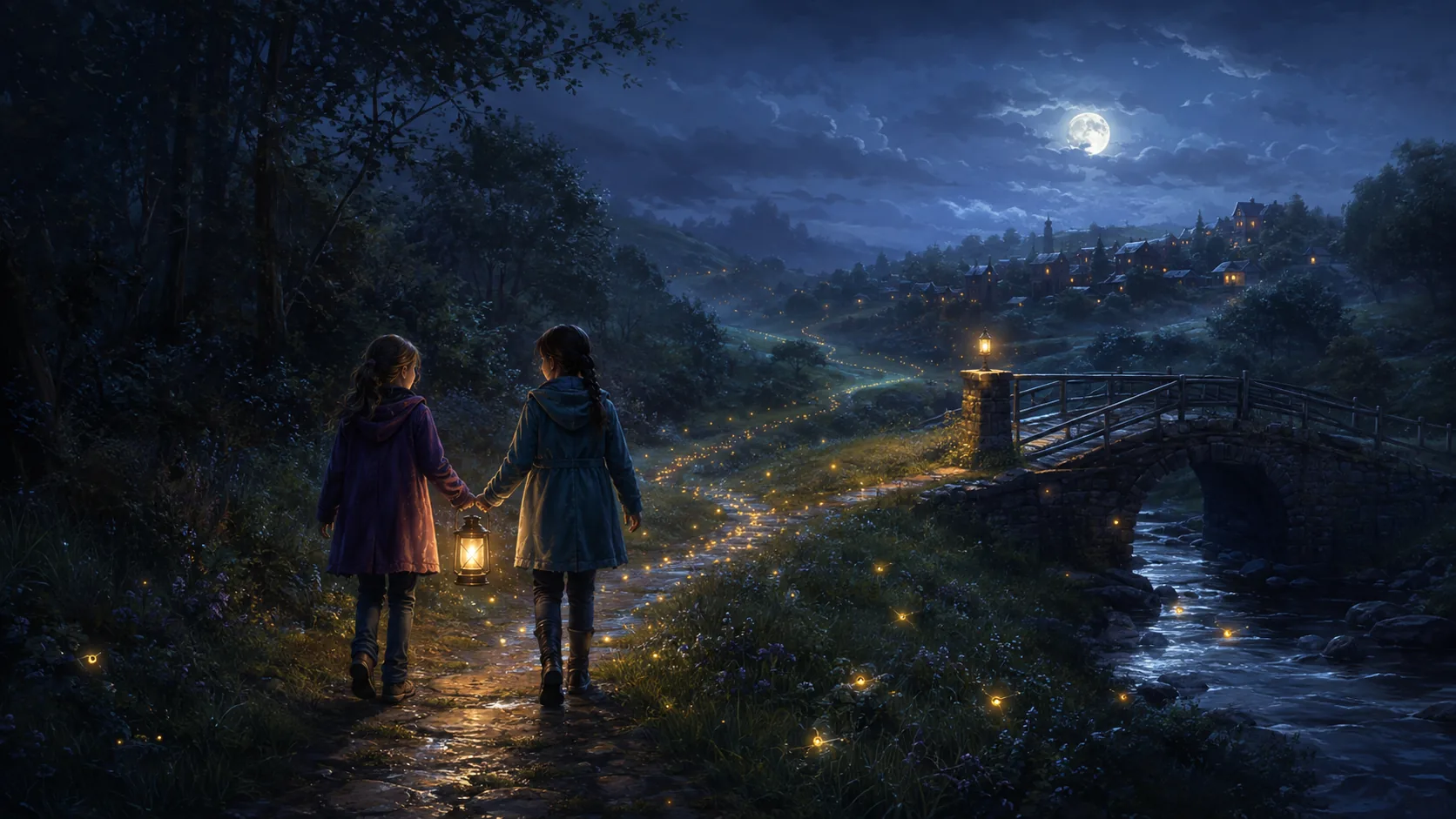
Ogni mattina Mina portava una piccola lanterna ambrata fino all'imbocco del ponte. Non lo faceva per attraversarlo. Le piaceva stare lì, con un piede sulla terraferma e l'altro appena sollevato, come se il giorno avesse bisogno di una domanda prima di cominciare.

Una mattina vide una figura dall'altra parte della nebbia. Era un bambino di Vallequieta, con un cappotto troppo grande e una lanterna spenta tra le mani. Aveva fatto qualche passo, poi si era fermato davanti al primo tratto nascosto.

Mina avrebbe potuto chiamarlo. Avrebbe potuto dirgli che il ponte c'era, che bastava andare avanti, che non doveva avere paura. Invece posò la sua lanterna sulla prima pietra e si sedette accanto ad essa.

Dopo un po', il bambino accese la propria. Le due luci rimasero lontane, ma si videro.

«Non si accompagna qualcuno tirandolo. Si lascia accesa una luce abbastanza a lungo perché possa scegliere se seguirla.»
03

Il mestiere di aspettare

Il giorno dopo Mina tornò. Anche il bambino tornò. Per tre mattine non si dissero nulla. Contarono il volo dei merli, ascoltarono l'acqua contro le arcate e guardarono la nebbia cambiare colore quando il sole saliva.

La quarta mattina arrivò Bice, la custode del ponte. Aveva una treccia bianca, stivali pieni di fango e un mazzo di chiavi che non aprivano nessuna porta. Servivano soltanto a ricordarle quante volte aveva scelto di tornare.

«Il ponte non è scomparso» disse Bice, sedendosi vicino a Mina. «Ma la nebbia diventa più alta quando qualcuno corre per dimostrare di non averne paura.»

Mina indicò il bambino dall'altra parte. «E se non riesce?»

«Allora oggi può restare sul primo gradino. Domani potrà scegliere il secondo. Un passo che arriva al momento giusto vale più di una corsa fatta per gli altri.»

Bice prese un filo dorato dal suo grembiule e lo legò alla ringhiera. Non era una corda per trascinare. Era un segno: ogni nodo indicava un punto in cui ci si poteva fermare senza dover tornare indietro.

04

La cassetta dei semi

Quell'anno l'autunno arrivò presto. Nei campi di Vallequieta la terra era pronta, ma mancavano i semi di grano chiaro che crescevano soltanto negli orti di Pian del Vento. Ogni anno i due paesi se li scambiavano, come si scambiano le cose che hanno bisogno di due mani per continuare a vivere.

La cassetta dei semi rimase per una settimana sul tavolo del mulino. Gli adulti guardavano la nebbia e proponevano di aspettare il vento, di costruire una zattera, di trovare una strada più lunga tra i boschi. Nessuno voleva dire ad alta voce che, forse, il ponte doveva essere attraversato.

Quando finalmente decisero di provarci, si presentarono in molti. Portarono corde, assi, campanelli e lanterne. Alcuni volevano arrivare dall'altra parte prima del tramonto. Altri continuavano a ripetere che, con una spinta gentile, anche chi restava indietro avrebbe potuto seguirli.

Mina ricordò le parole di Bice. Prese la cassetta dei semi e la posò sul primo gradino. Poi si voltò verso Timo, il bambino di Vallequieta, che era arrivato fino alla sua terza pietra.

«Non dobbiamo attraversare tutto oggi» disse. «Possiamo portare la cassetta fino a dove ci va.»

Timo strinse la lanterna. Non sorrise, non disse di sì. Fece soltanto un piccolo passo.

05

Il ponte che ascoltava

Mina fece un passo. Timo ne fece uno. Poi entrambi si fermarono. La nebbia non si aprì subito, e nessuno chiese che lo facesse.

Dalla riva di Pian del Vento, Bice tenne ferma la prima lanterna. Dalla riva di Vallequieta, una donna posò la mano sulla ringhiera e aspettò. Le persone impararono a non riempire ogni silenzio con un consiglio.

Un passo, un respiro. Un passo, un respiro.

La pietra sotto i loro piedi era fredda, ma solida. Il filo dorato passava da un nodo all'altro e indicava dove fermarsi. Quando Timo arrivò a metà del ponte, la sua lanterna tremò.

«Non vedo più la riva» disse.

Mina guardò la pietra davanti a loro. «Allora guardiamo questa.»

Rimasero lì finché il respiro di Timo tornò lento. Poi ripresero. Non fu la nebbia a spostarsi per magia: furono i loro occhi, dopo un po', a distinguere il profilo dell'arco, il luccichio dell'acqua e il filo dorato che continuava oltre.

Quando raggiunsero l'altra riva, la cassetta dei semi non sembrò più pesante. L'avevano portata insieme, un tratto ciascuno, senza chiedere a nessuno di camminare a un ritmo diverso dal proprio.

06

La festa delle due rive

Il giorno seguente Vallequieta seminò i suoi campi. Pian del Vento mandò pane, stoffe e una cesta di mele. Nessuno chiamò il passaggio un'impresa eroica. Lo chiamarono semplicemente un incontro.

Da allora, quando la nebbia scendeva sul fiume, il ponte non restava vuoto. Qualcuno lasciava una lanterna sul primo gradino. Qualcuno attraversava fino a metà e tornava indietro. Qualcuno arrivava all'altra riva in un'ora, qualcun altro in tre giorni. Tutti i passi contavano, anche quelli che cambiavano idea.

Timo diventò il custode della lanterna di Vallequieta. Mina continuò a sedersi sul primo gradino quando aveva bisogno di ascoltare il fiume. A volte si incontravano al centro. A volte si salutavano da lontano. Avevano capito che la vicinanza non si misura soltanto dalla distanza percorsa.

Col tempo, la gente smise di dire che nella nebbia mancavano delle pietre. Disse invece che il ponte aveva imparato ad aspettare.

Se l’accoglienza ha aperto un passaggio, continua il cammino con Il Peso del Ghiaccio e la Promessa del Sole.

La distanza non scompare perché qualcuno ci porta dall'altra parte. Diventa attraversabile quando ogni passo può avere il proprio tempo.

L'accoglienza è una luce lasciata accesa: non trascina nessuno nella nebbia, ma dice che, quando sarà il momento, ci sarà una strada.
English translation

The Bridge in the Mist

In a valley divided by stubborn mist, two riverbanks learn that a bridge is crossed without haste, by listening to the footsteps of the person walking beside you.

01

The two banks

There were two villages in Willow Valley: Windy Plain, resting against the hill, and Quiet Valley, spread beside the water. Between them flowed a wide, slow river crossed by an old stone bridge.

The bridge had rounded arches, a wooden railing, and smooth stones polished by all the years people had walked across it. Once it had joined the markets, festivals, and families of the two banks. Then, one autumn, a mist so thick arrived that it seemed to erase the middle of the bridge.

From Windy Plain, travelers could see only three or four steps ahead. Those coming from Quiet Valley saw the same three or four steps, but in the opposite direction. No one could say where the bridge ended. So people began to tell each other that, inside the mist, some stones were missing.

The truth was simpler: the stones were still there. What was missing was the time to stop and wait for the eyes to learn to recognize them.

02

Mina and the first step

Mina lived in Windy Plain, a girl who knew how to listen to things before they made a sound. She recognized the wind by the way it moved the curtains and the river by the breath it left beneath the windows.

Every morning Mina carried a small amber lantern to the entrance of the bridge. She did not do it to cross. She liked to stand there, one foot on solid ground and the other barely lifted, as if the day needed a question before it could begin.

One morning she saw a figure on the other side of the mist. It was a boy from Quiet Valley, wearing a coat that was too large and holding an unlit lantern. He had taken a few steps, then stopped before the hidden stretch.

Mina could have called to him. She could have said that the bridge was there, that he only had to keep going, that he should not be afraid. Instead, she placed her lantern on the first stone and sat beside it.

After a while, the boy lit his own. The two lights remained far apart, but they could see each other.

You do not guide someone by pulling them. You leave a light on long enough for them to choose whether to follow it.
03

The work of waiting

The next day Mina returned. The boy returned too. For three mornings they said nothing. They counted the flight of the blackbirds, listened to water against the arches, and watched the mist change color as the sun climbed.

On the fourth morning Bice arrived, the keeper of the bridge. She had a white braid, mud-filled boots, and a ring of keys that opened no door. They served only to remind her how many times she had chosen to return.

“The bridge has not disappeared,” Bice said, sitting beside Mina. “But the mist grows higher when someone runs to prove they are not afraid of it.”

Mina pointed toward the boy on the other side. “What if he cannot do it?”

“Then today he can stay on the first step. Tomorrow he can choose the second. A step taken at the right moment is worth more than a race run for someone else.”

Bice took a golden thread from her apron and tied it to the railing. It was not a rope for pulling. It was a sign: every knot marked a place where one could stop without having to go back.

04

The seed box

That year autumn arrived early. In the fields of Quiet Valley the soil was ready, but they lacked the pale wheat seeds that grew only in the gardens of Windy Plain. Every year the two villages exchanged them, as people exchange the things that need two hands to keep living.

The seed box remained on the miller's table for a week. The adults watched the mist and suggested waiting for the wind, building a raft, or finding a longer road through the woods. No one wanted to say aloud that perhaps the bridge had to be crossed.

When they finally decided to try, many people came. They brought ropes, boards, bells, and lanterns. Some wanted to reach the other side before sunset. Others kept repeating that, with a gentle push, those left behind could follow them too.

Mina remembered Bice's words. She took the seed box and placed it on the first step. Then she turned toward Timo, the boy from Quiet Valley, who had reached his third stone.

“We do not have to cross all of it today,” she said. “We can carry the box as far as we are able.”

Timo tightened his grip on the lantern. He did not smile or say yes. He simply took one small step.

05

The bridge that listened

Mina took one step. Timo took one. Then they both stopped. The mist did not open at once, and no one asked it to.

From the bank at Windy Plain, Bice held the first lantern steady. From the bank at Quiet Valley, a woman placed her hand on the railing and waited. The people learned not to fill every silence with advice.

One step, one breath. One step, one breath.

The stone beneath their feet was cold but solid. The golden thread passed from knot to knot and showed where to stop. When Timo reached the middle of the bridge, his lantern trembled.

“I cannot see the bank anymore,” he said.

Mina looked at the stone in front of them. “Then let us look at this one.”

They stayed there until Timo's breathing became slow again. Then they continued. It was not magic that moved the mist: after a while, their eyes were able to distinguish the shape of the arch, the glimmer of the water, and the golden thread continuing beyond it.

When they reached the other bank, the seed box no longer seemed heavy. They had carried it together, one stretch each, without asking anyone to walk at a different pace from their own.

06

The festival of two banks

The next day Quiet Valley sowed its fields. Windy Plain sent bread, cloth, and a basket of apples. No one called the crossing a heroic feat. They simply called it a meeting.

From then on, whenever the mist descended on the river, the bridge did not remain empty. Someone left a lantern on the first step. Someone crossed halfway and turned back. Someone reached the other bank in an hour, someone else in three days. Every step counted, even the ones that changed their minds.

Timo became the keeper of Quiet Valley's lantern. Mina continued to sit on the first step whenever she needed to listen to the river. Sometimes they met in the center. Sometimes they greeted each other from far away. They had understood that closeness is not measured only by the distance traveled.

In time, people stopped saying that stones were missing in the mist. Instead, they said that the bridge had learned how to wait.

Distance does not disappear because someone carries us to the other side. It becomes crossable when every step is allowed to have its own time.

Welcome is a light left on: it pulls no one into the mist, but says that when the time comes, there will be a road.

La tua impressione

Come hai trovato questa storia?

Lascia una valutazione da una a cinque stelle per aiutare altri lettori a scegliere il loro prossimo racconto.

Valuta Il ponte nella nebbia da una a cinque stelle

Scegli da una a cinque stelle.

La scelta viene ricordata su questo dispositivo.

Il viaggio continua

Altre storie da custodire

Scelti per te

Tre racconti vicini per tema, atmosfera e significato