Cantastoriememorie · emozioni · tradizioni Torna ai racconti

Poesia narrata · 5 min di lettura

Il canto dell'umanità

In una piazza dove tutti parlano e nessuno ascolta, una voce semplice ricorda che la speranza non ha una sola lingua.

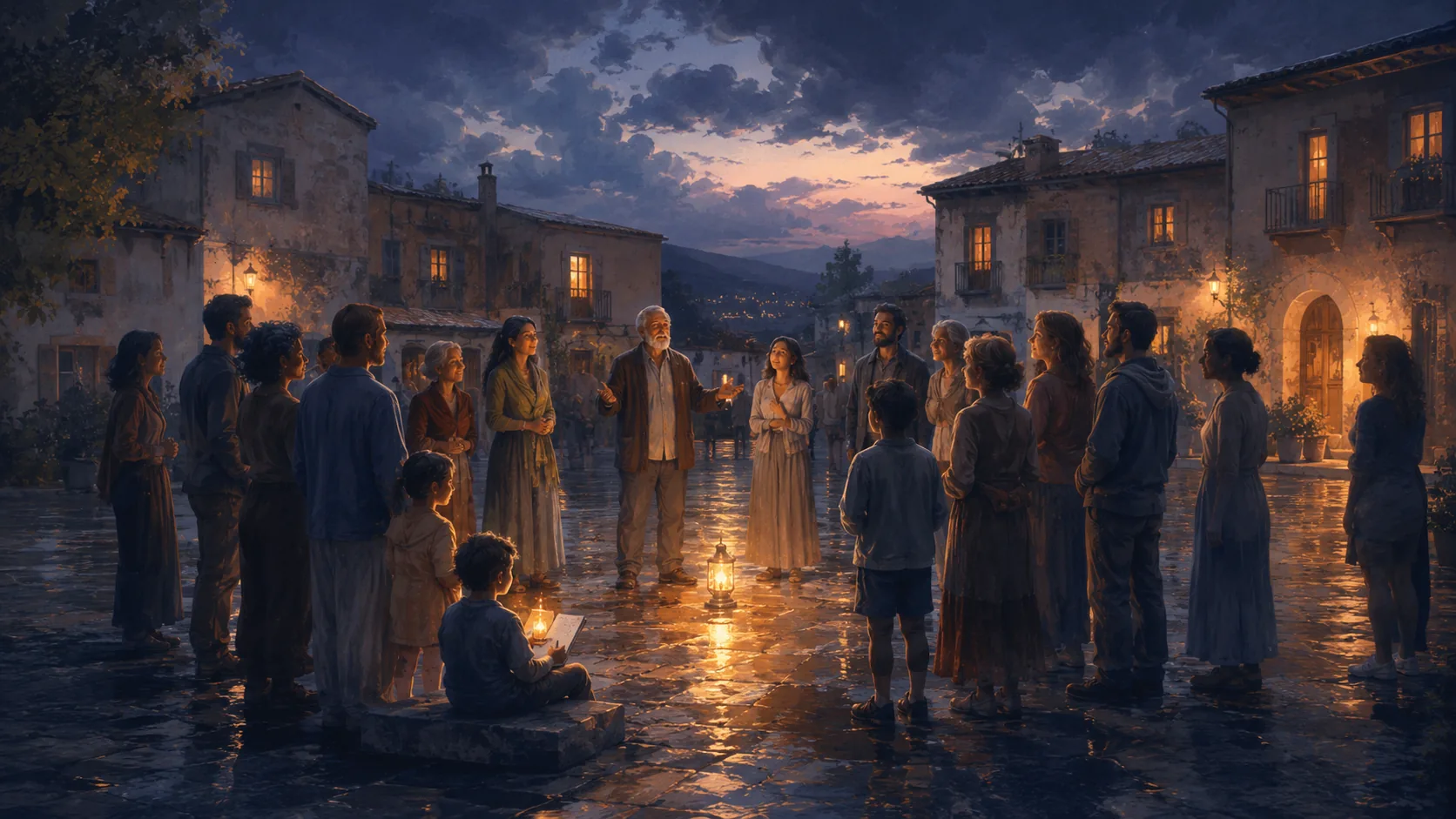
Persone di età diverse riunite in una piazza, con una luce dorata al centro
Nessuna voce
resta sola

Ascolta la storia

La lettura vocale non è disponibile in questo browser

Video narrativo

Il canto dell'umanità

Guarda la fiaba in formato illustrato e scopri come il respiro di una bambina, una voce semplice e quattro parole possano insegnare a un'intera città la forza dell'ascolto.

01

La piazza delle voci

Nella città delle finestre aperte, la piazza cominciava a parlare prima ancora che sorgesse il sole. C'erano il richiamo del fornaio, il rumore delle saracinesche, i saluti scambiati in fretta e le voci di chi arrivava da strade diverse.

Ognuno aveva qualcosa da dire. Il pescatore raccontava il mare, la maestra parlava dei bambini, il venditore offriva la sua frutta, la donna arrivata da lontano teneva stretto un elenco di parole nuove da imparare.

La piazza era piena di suoni, ma quasi nessuno ascoltava davvero. Le voci si accavallavano come fili lasciati sul tavolo. Erano vicine, eppure non riuscivano a incontrarsi.

La sera, quando le finestre si illuminavano, la città sembrava stanca delle proprie parole. Aveva raccontato molto di sé, ma non sapeva più che cosa avessero raccontato gli altri.

02

Il giorno senza musica

Ogni anno, alla fine dell'estate, la città organizzava una festa. Sul palco della piazza arrivavano musicisti, coristi e bambini con le mani piene di nastri colorati. La gente si sedeva insieme, ma spesso continuava a parlare per conto proprio.

Quell'anno, proprio quando la musica stava per cominciare, un temporale fece saltare la corrente. Le lampadine si spensero, i microfoni tacquero e il palco rimase vuoto sotto una pioggia sottile.

All'inizio tutti protestarono. Qualcuno diede la colpa al Comune, qualcuno al vento, qualcuno a chi aveva montato le luci. Poi, senza musica e senza amplificatori, la piazza si ritrovò improvvisamente nuda.

Fu allora che una bambina salì sul primo gradino del palco. Non aveva preparato un discorso. Guardò le persone davanti a sé e fece una cosa piccolissima: respirò lentamente, come se volesse ricordare a tutti che, prima delle parole, esiste il respiro.

«Un canto non è una voce più forte delle altre. È il momento in cui nessuna voce resta sola.»
03

La prima voce

Dal fondo della piazza arrivò un suono basso, quasi un mormorio. Era un uomo anziano che teneva le mani sulle ginocchia e cantava senza parole. La melodia sembrava antica, ma non apparteneva a una sola casa.

La bambina si voltò verso di lui. L'uomo continuò a cantare, piano, lasciando spazio al rumore della pioggia. Dopo qualche istante, la maestra aggiunse una nota. Poi il fornaio, con la voce ruvida di chi si alza presto. Poi la donna arrivata da lontano, che non conosceva ancora tutte le parole della città ma conosceva bene il modo in cui una ninnananna può attraversare una distanza.

Nessuno dirigeva. Nessuno chiedeva agli altri di cantare nello stesso modo. Le voci arrivavano diverse: alcune limpide, altre stanche, alcune profonde, altre leggere come un filo d'aria.

La piazza non diventò silenziosa. Diventò attenta. Per la prima volta ciascuno ascoltava la voce che aveva accanto prima di aggiungere la propria.

04

Le parole che fanno spazio

Quando il canto si fermò, nessuno applaudì subito. Le persone rimasero ferme, come dopo aver ricevuto una notizia che ha bisogno di tempo per diventare chiara.

La bambina prese il suo piccolo quaderno e scrisse quattro parole che aveva sentito durante la sera: pace, grazie, vieni, resta.

«Sono parole semplici» disse la maestra.

«Per questo sono difficili» rispose l'uomo anziano.

La donna arrivata da lontano aggiunse una parola nella sua lingua. Nessuno la capì subito, ma tutti capirono dal suo sorriso che significava qualcosa di buono. La bambina la copiò accanto alle altre, lasciando spazio per impararla.

Quella sera la città comprese che ascoltare non significa soltanto stare zitti. Significa lasciare una porta aperta dentro di sé, abbastanza grande perché possa entrarci la storia di qualcun altro.

05

Il coro

Il giorno dopo, la piazza tornò alle sue abitudini. Le saracinesche si alzarono, il fornaio impastò il pane, il mercato riempì l'aria di richiami. Ma qualcosa era cambiato.

Le persone si interrompevano meno. Prima di rispondere, facevano una pausa. Il pescatore imparò il nome della donna arrivata da lontano. La donna imparò a chiedere il pane senza vergognarsi delle parole ancora incerte. La maestra lasciò ai bambini qualche minuto in più per raccontare ciò che avevano visto.

Non erano diventati uguali. Non lo sarebbero mai diventati, e non ce n'era bisogno. Avevano soltanto scoperto che l'armonia non nasce quando tutte le voci pronunciano la stessa nota, ma quando ogni nota trova un posto accanto alle altre.

Da quel giorno, alla fine dell'estate, la città tornò in piazza senza palco e senza microfoni. Ognuno portava una parola, un ricordo o una melodia. E prima di cominciare, ascoltava il respiro di chi gli stava vicino.

06

Il canto dell'umanità

Col tempo, qualcuno dimenticò chi avesse iniziato quel primo canto. Alcuni dicevano fosse stato l'uomo anziano, altri la bambina, altri ancora la pioggia che aveva spento le luci.

Forse avevano ragione tutti. Un canto nasce quando una voce si offre e un'altra decide di non lasciarla sola.

La città delle finestre aperte continuò a cambiare. Le persone partirono, altre arrivarono, le piazze ebbero nuove insegne e nuove stagioni. Ma ogni volta che il rumore diventava troppo forte, qualcuno ricordava quelle quattro parole: pace, grazie, vieni, resta.

E allora le voci rallentavano. Non per diventare perfette, ma per diventare umane.

Per incontrare un’altra storia di speranza e coraggio civile, leggi anche La luce che non si spegne.

Il canto dell'umanità non appartiene a chi canta più forte. Appartiene a chi ascolta abbastanza da riconoscere, nella voce degli altri, una parte della propria.

La speranza ha molte voci. La pace comincia quando impariamo ad ascoltarle.
English translation

The Song of Humanity

In a square where everyone speaks and no one listens, a simple voice reminds us that hope has no single language.

01

The square of voices

In the city of open windows, the square began to speak before the sun had even risen. There was the baker's call, the clatter of shutters, greetings exchanged in haste, and the voices of people arriving from different roads.

Everyone had something to say. The fisherman talked about the sea, the teacher spoke of the children, the vendor offered his fruit, and the woman who had come from far away held tightly to a list of new words she was learning.

The square was full of sounds, but almost no one was truly listening. The voices overlapped like threads left on a table. They were close, yet they could not meet.

In the evening, when the windows lit up, the city seemed tired of its own words. It had told a great deal about itself, but it no longer knew what the others had told.

02

The day without music

Every year, at the end of summer, the city held a festival. Musicians, choristers, and children with hands full of colored ribbons came to the stage in the square. People sat together, but often continued talking in their own separate conversations.

That year, just as the music was about to begin, a storm knocked out the power. The bulbs went dark, the microphones fell silent, and the stage stood empty beneath a fine rain.

At first everyone protested. Someone blamed the town hall, someone blamed the wind, and someone blamed the people who had installed the lights. Then, without music and without amplifiers, the square suddenly found itself bare.

That was when a little girl climbed onto the first step of the stage. She had not prepared a speech. She looked at the people in front of her and did something very small: she breathed slowly, as if reminding everyone that before words, there is breath.

A song is not one voice louder than the others. It is the moment when no voice is left alone.
03

The first voice

From the back of the square came a low sound, almost a murmur. It was an old man with his hands on his knees, singing without words. The melody seemed ancient, but it did not belong to one house alone.

The little girl turned toward him. The man kept singing softly, leaving room for the sound of the rain. After a few moments, the teacher added a note. Then the baker, with the rough voice of someone who rises early. Then the woman who had come from far away, who did not yet know all the city's words but knew well how a lullaby can cross a distance.

No one conducted. No one asked the others to sing in the same way. The voices arrived differently: some clear, others tired, some deep, others light as a thread of air.

The square did not become silent. It became attentive. For the first time, each person listened to the voice beside them before adding their own.

04

The words that make room

When the singing stopped, no one applauded right away. The people remained still, as if they had received news that needed time to become clear.

The little girl took her notebook and wrote four words she had heard during the evening: peace, thank you, come, stay.

“They are simple words,” said the teacher.

“That is why they are difficult,” replied the old man.

The woman who had come from far away added a word in her own language. No one understood it at once, but everyone understood from her smile that it meant something good. The little girl copied it beside the others, leaving room to learn it.

That evening the city understood that listening does not mean only keeping quiet. It means leaving a door open inside yourself, wide enough for someone else's story to enter.

05

The chorus

The next day, the square returned to its habits. The shutters rose, the baker kneaded bread, and the market filled the air with calls. But something had changed.

People interrupted one another less. Before answering, they paused. The fisherman learned the name of the woman who had come from far away. She learned to ask for bread without being ashamed of words that were still uncertain. The teacher gave the children a few more minutes to tell what they had seen.

They had not become the same. They never would, and there was no need. They had simply discovered that harmony is not born when every voice sings the same note, but when each note finds a place beside the others.

From that day on, at the end of summer, the city returned to the square without a stage and without microphones. Everyone brought a word, a memory, or a melody. And before beginning, they listened to the breath of the person beside them.

06

The song of humanity

In time, someone forgot who had begun that first song. Some said it had been the old man, others the little girl, and still others the rain that had put out the lights.

Perhaps they were all right. A song is born when one voice offers itself and another decides not to leave it alone.

The city of open windows continued to change. People left, others arrived, the squares gained new signs and new seasons. But whenever the noise became too loud, someone remembered those four words: peace, thank you, come, stay.

And then the voices slowed down. Not to become perfect, but to become human.

The song of humanity does not belong to the person who sings the loudest. It belongs to the one who listens long enough to recognize, in another person's voice, a part of their own.

Hope has many voices. Peace begins when we learn to listen to them.

La tua impressione

Come hai trovato questa storia?

Lascia una valutazione da una a cinque stelle per aiutare altri lettori a scegliere il loro prossimo racconto.

Valuta Il canto dell'umanità da una a cinque stelle

Scegli da una a cinque stelle.

La scelta viene ricordata su questo dispositivo.

Il viaggio continua

Altre storie da custodire

Scelti per te

Tre racconti vicini per tema, atmosfera e significato