Cantastoriememorie · emozioni · tradizioni Torna ai racconti

Memoria · 7 min di lettura

Il nome sul legno

A Portoferro, un uomo che aveva perso quasi tutto ricomincia da una vecchia insegna, da un ragazzo e da una porta lasciata aperta.

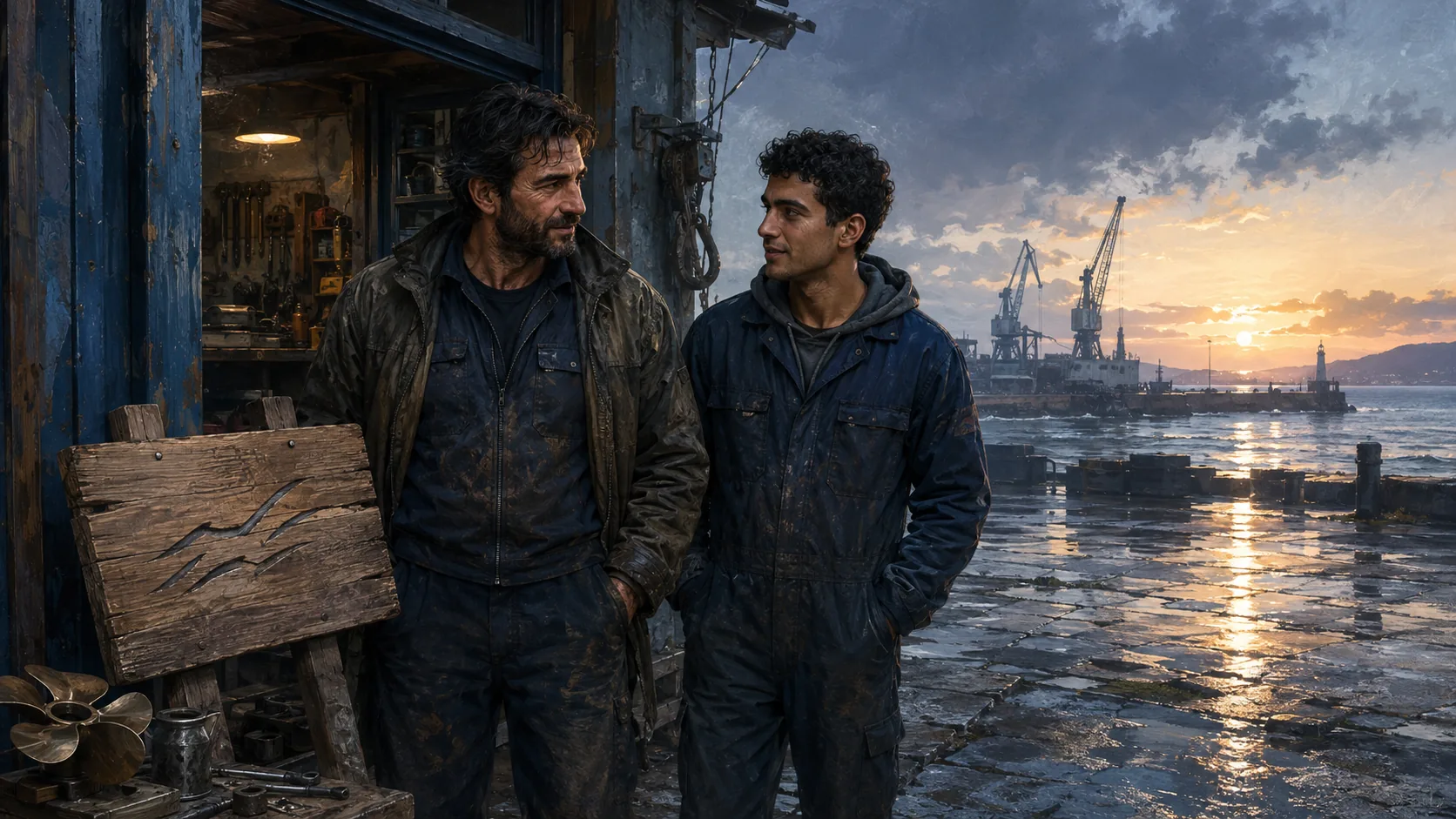
Elia e Samir davanti al laboratorio, con il porto di Portoferro sullo sfondo
Portoferro
prima dell'alba

Ascolta la storia

La lettura vocale non è disponibile in questo browser

Video narrativo

Il nome sul legno

Guarda il racconto in formato illustrato, con immagini cinematografiche, musica originale e parole da seguire lungo il cammino di Elia.

01

La città del vento

Portoferro si svegliava prima del sole. Alle cinque del mattino il porto era già pieno di rumori: catene che battevano sul metallo, motori che tossivano, gabbiani che litigavano sopra i capannoni. La pioggia arrivava di lato e lasciava sulle banchine un velo lucido, come se la città fosse stata appena lavata e nessuno avesse ancora avuto il coraggio di entrarci.

Elia Moretti aveva quarant'anni e mani da meccanico. Per quasi vent'anni aveva lavorato in un'officina vicino alla stazione, dove sapeva riconoscere un guasto dal suono di una cinghia e rimettere in moto un motore con tre attrezzi e molta pazienza.

Poi l'officina aveva chiuso. Il proprietario aveva venduto tutto, i colleghi avevano preso strade diverse e Elia era rimasto con una cassetta di chiavi, qualche debito e una casa diventata troppo silenziosa. Anche il matrimonio con Chiara si era consumato senza grandi litigi: una distanza alla volta, una telefonata non restituita, una porta chiusa con troppa stanchezza.

Elia non raccontava quasi mai quel periodo. Diceva soltanto: «È andata male». Come se la sua vita fosse stata un lavoro consegnato in ritardo e ormai impossibile da correggere.

Quando trovava un oggetto abbandonato, però, non riusciva a lasciarlo per strada. Riparava bilance, carrelli, ventilatori e vecchi frigoriferi nel retro di un magazzino. Non li vendeva sempre. A volte bastava vederli funzionare di nuovo per qualche minuto.

02

La tavola blu

Il magazzino apparteneva a Teresa Belli, sessantadue anni e una memoria precisa per ogni persona passata dal porto. Teresa aveva una piccola bottega con una saracinesca blu, stretta tra un deposito di reti e un bar che apriva soltanto quando il mare era calmo.

«Se vuoi lavorare, lavora alla luce» gli disse una mattina. «Il buio va bene per pensare. Non per aggiustare le cose.»

Teresa gli lasciò una stanza sul retro e una vecchia insegna di legno trovata sotto una catasta di assi. Era consumata dalla salsedine. Sul fronte non si leggeva più nulla; sul retro, invece, tra chiodi arrugginiti e strisce di vernice, compariva un nome.

ELIA.

Elia passò il pollice sulla scritta. Non ricordava di averla incisa. Teresa gli spiegò che, molti anni prima, suo padre portava nella bottega i ragazzi del quartiere e segnava il loro nome sul legno quando imparavano a usare un attrezzo senza farsi male. Non era un diploma. Era un modo per dire: ti ho visto impegnarti.

«Ero bravo?» domandò Elia.

«Eri testardo» rispose Teresa. «La bravura è venuta dopo.»

«Il legno conserva i segni» disse Teresa. «Non per ricordarti chi eri. Per mostrarti che puoi ancora lasciare qualcosa.»

Elia cominciò a levigare la tavola. Ogni passata di carta vetrata toglieva un poco di polvere, ma non cancellava il nome. Era lì, più profondo dei graffi e delle macchie d'olio.

03

Il ragazzo del porto

Samir Haddad arrivò in un pomeriggio di vento. Aveva diciannove anni, una giacca troppo leggera e un ventilatore rotto sotto il braccio. Lo appoggiò sul banco senza chiedere permesso.

«Mi hanno detto che qui aggiustate le cose» disse.

Elia guardò il ventilatore. «Qui si prova.»

Samir rimase sulla soglia. Aveva già chiesto lavoro in diversi posti. In alcuni gli avevano promesso una telefonata. In altri gli avevano detto di tornare con più esperienza, come se l'esperienza fosse una cosa che si potesse trovare già pronta.

«Posso imparare» disse.

Elia avrebbe voluto rispondere che non aveva tempo per insegnare. Aveva ancora troppe cose da rimettere in ordine dentro di sé. Invece prese un cacciavite e lo porse al ragazzo.

«Prima togli la polvere. Poi vediamo se il motore vuole parlare.»

Quel giorno Samir pulì il ventilatore, raccolse le viti in un barattolo e imparò che un oggetto può avere due guasti, non uno solo. Il giorno dopo tornò. Il terzo portò un panino per entrambi.

Cominciarono così: senza promesse, senza fotografie, senza chiamare quella collaborazione una salvezza. Elia insegnava a Samir a distinguere il ferro dall'alluminio. Samir gli ricordava di fare una pausa e di non lavorare sempre con la testa bassa.

04

Le cose che tornano

La bottega cambiò lentamente. Arrivavano una bilancia del mercato del pesce, un carrello con una ruota storta, un frigorifero che aveva smesso di raffreddare proprio nel giorno peggiore. Teresa segnava gli ordini su un quaderno. Elia faceva i preventivi. Samir imparava a non avere fretta.

Ogni oggetto riparato portava con sé una storia breve. La bilancia era appartenuta a un uomo che non voleva chiudere il banco. Il carrello serviva a una donna che non riusciva più a portare da sola le cassette. Il frigorifero apparteneva a un barista che aveva promesso alla figlia di non arrendersi.

Elia ascoltava quelle storie senza sentirsi obbligato a risolverle. Aveva capito che una cosa può essere utile anche senza diventare perfetta.

Una sera Chiara venne a prendere l'ultima scatola rimasta nella vecchia casa. Vide la tavola di legno appoggiata al muro e il nome inciso sul retro.

«Non sapevo che tuo padre lo avesse scritto» disse.

«Nemmeno io.»

Chiara annuì. Non si abbracciarono e non promisero di ricominciare. Parlarono, invece, senza usare la stanchezza come una scusa. Quando lei andò via, Elia rimase davanti alla porta per un po'. Non si sentiva guarito. Si sentiva presente.

05

La notte della pioggia

La prova arrivò a novembre, durante una notte di pioggia piena. Sandro Piras, che lavorava al mercato ittico, portò in bottega una vecchia bilancia a braccio. Doveva tornare in funzione prima dell'alba, altrimenti avrebbe perso il posto al banco.

Elia e Samir lavorarono fino a tardi. Quando il meccanismo sembrò funzionare, Elia uscì a prendere un caffè. Samir rimase a controllare l'ultima vite. La bilancia cedette proprio allora: un ingranaggio saltò e il braccio di metallo cadde sul pavimento.

Samir rimase immobile. Quando Elia rientrò, avrebbe potuto accusarlo. Per un istante sentì la frase già pronta, dura e familiare: non sei capace, fai sempre danni, lascia fare a chi sa.

Poi guardò il nome sul legno.

«Rifacciamo il passaggio» disse.

Samir abbassò gli occhi. «È colpa mia.»

«È un errore nostro. Io ho lasciato il lavoro a metà.»

Ripararono la bilancia prima dell'alba. Non fu un lavoro elegante. Ci furono mani sporche, una vite persa e una saldatura da rifare due volte. Quando Sandro tornò, il braccio oscillava con un rumore leggero e preciso.

«Quanto vi devo?» chiese.

Elia guardò Samir. «Quello che avevamo stabilito.»

Non chiese un prezzo maggiore per la notte passata in bianco. Non regalò il lavoro. Capì che dignità significa anche dare un valore giusto al tempo degli altri.

06

Una porta aperta

In primavera la tavola fu pronta. Elia la dipinse di blu, lasciando visibili le venature del legno. Sul fronte scrisse il nome della bottega. Sul retro, invece, non coprì la vecchia incisione.

Samir gli chiese perché.

«Perché prima di noi c'era qualcuno. E dopo di noi ci sarà qualcun altro.»

Teresa portò un pennello sottile. In fondo all'insegna aggiunsero una frase, piccola ma leggibile: E, se hai pazienza, anche le persone.

La bottega riaprì un lunedì mattina. Non arrivarono fotografi né persone importanti. Arrivarono la donna del carrello, il barista, Sandro dal mercato e un bambino con una ruota da raddrizzare. Samir indossava una tuta nuova. Elia gli consegnò una copia delle chiavi.

«Non è un regalo» disse. «È una responsabilità.»

Samir strinse le chiavi nel pugno. Elia si voltò verso l'insegna. Il suo nome era ancora sul legno, ma non sembrava più un'accusa. Non diceva che aveva fallito. Diceva che era rimasto abbastanza a lungo da ricominciare.

Per ritrovare la stessa dignità che diventa futuro, leggi anche Il Peso dell’Oro.

Da quel giorno Portoferro continuò a essere dura, fredda e rumorosa. Ma davanti alla saracinesca blu rimaneva accesa una lampada, anche quando il porto non aveva più nulla da chiedere.

Il nome sul legno non era più un'accusa. Era una promessa: con pazienza, anche le persone possono tornare a funzionare.

English translation

The Name on the Wood

In Portoferro, a man who has lost almost everything begins again with an old sign, a boy, and a door left open.

01

The windy city

Portoferro woke before the sun. At five in the morning, the harbor was already full of noise: chains striking metal, engines coughing, gulls arguing above the warehouses. The rain came sideways and left a shining veil on the docks, as if the city had just been washed and no one had yet found the courage to enter it.

Elia Moretti was forty years old and had a mechanic's hands. For almost twenty years he had worked in a garage near the station, where he could recognize a fault from the sound of a belt and get an engine running again with three tools and a great deal of patience.

Then the garage closed. The owner sold everything, his colleagues took different roads, and Elia was left with a toolbox, a few debts, and a home that had become too quiet. His marriage to Chiara had also worn away without great arguments: one distance at a time, one unanswered call, one door closed with too much weariness.

Elia almost never spoke about that period. He only said, “It went badly.” As if his life had been a job delivered late and now impossible to correct.

Yet when he found an abandoned object, he could not leave it in the street. He repaired scales, carts, fans, and old refrigerators in the back of a warehouse. He did not always sell them. Sometimes it was enough to see them working again for a few minutes.

02

The blue board

The warehouse belonged to Teresa Belli, sixty-two years old and able to remember every person who had passed through the harbor. Teresa had a small shop with a blue shutter, squeezed between a net depot and a bar that opened only when the sea was calm.

“If you want to work, work in the light,” she told him one morning. “Darkness is fine for thinking. Not for fixing things.”

Teresa gave him a room in the back and an old wooden sign found beneath a pile of planks. Salt had worn it down. Nothing could be read on the front; on the back, among rusty nails and strips of paint, a name appeared.

ELIA.

Elia ran his thumb over the writing. He did not remember carving it. Teresa explained that many years earlier, her father had brought neighborhood boys into the shop and marked their names on the wood when they learned to use a tool without hurting themselves. It was not a diploma. It was a way of saying: I saw you make the effort.

“Was I good?” Elia asked.

“You were stubborn,” Teresa replied. “Skill came later.”

Elia began sanding the board. Each pass of the sandpaper removed a little dust, but it did not erase the name. It was there, deeper than the scratches and oil stains.

Wood keeps its marks—not to remind you who you were, but to show you that you can still leave something behind.
03

The boy from the harbor

Samir Haddad arrived on a windy afternoon. He was nineteen, wearing a jacket that was too light, and carrying a broken fan under his arm. He set it on the workbench without asking permission.

“They told me you fix things here,” he said.

Elia looked at the fan. “Here, we try.”

Samir stayed on the threshold. He had already asked for work in several places. In some, they had promised to call. In others, they had told him to come back with more experience, as if experience were something one could find ready-made.

“I can learn,” he said.

Elia wanted to reply that he had no time to teach. There were still too many things to put back in order inside himself. Instead, he picked up a screwdriver and handed it to the boy.

“First remove the dust. Then we will see whether the motor wants to speak.”

That day Samir cleaned the fan, collected the screws in a jar, and learned that an object can have two faults, not just one. The next day he returned. On the third, he brought a sandwich for both of them.

That was how they began: without promises, without photographs, without calling the collaboration a rescue. Elia taught Samir to tell iron from aluminum. Samir reminded him to take a break and not always work with his head down.

04

The things that return

The shop changed slowly. A fish-market scale arrived, then a cart with a crooked wheel, then a refrigerator that had stopped cooling on the worst possible day. Teresa wrote the orders in a notebook. Elia prepared the estimates. Samir learned not to hurry.

Every repaired object carried a short story. The scale belonged to a man who did not want to close his stall. The cart was used by a woman who could no longer carry the crates alone. The refrigerator belonged to a bartender who had promised his daughter he would not give up.

Elia listened to those stories without feeling obliged to solve them. He had understood that something can be useful without becoming perfect.

One evening Chiara came to collect the last box left in their old home. She saw the wooden board leaning against the wall and the name carved on the back.

“I didn't know your father had written it,” she said.

“Neither did I.”

Chiara nodded. They did not embrace and did not promise to start again. Instead, they talked without using weariness as an excuse. When she left, Elia remained in front of the door for a while. He did not feel healed. He felt present.

05

The night of rain

The test came in November, during a night of heavy rain. Sandro Piras, who worked at the fish market, brought an old beam scale to the shop. It had to work again before dawn, or he would lose his place at the stall.

Elia and Samir worked late. When the mechanism seemed to be working, Elia went out for a coffee. Samir stayed to check the last screw. The scale failed at that exact moment: a gear sprang loose and the metal arm fell to the floor.

Samir stood still. When Elia came back, he could have blamed him. For an instant he felt the sentence already prepared, hard and familiar: you can't do it, you always cause damage, leave it to someone who knows.

Then he looked at the name on the wood.

“Let's go through the step again,” he said.

Samir lowered his eyes. “It's my fault.”

“It's our mistake. I left the job halfway through.”

They repaired the scale before dawn. It was not elegant work. There were dirty hands, a lost screw, and a weld that had to be redone twice. When Sandro returned, the arm moved with a light, precise sound.

“How much do I owe you?” he asked.

Elia looked at Samir. “What we agreed.”

He did not ask for more because of the sleepless night. He did not give the work away. He understood that dignity also means giving the other person's time a fair value.

06

An open door

In spring, the board was ready. Elia painted it blue, leaving the grain of the wood visible. On the front he wrote the name of the shop. On the back, he did not cover the old carving.

Samir asked him why.

“Because someone came before us. And someone else will come after us.”

Teresa brought a fine brush. At the bottom of the sign they added a small but readable sentence: <em>And, if you have patience, people too.</em>

The shop reopened on a Monday morning. No photographers or important people arrived. The woman with the cart came, the bartender came, Sandro came from the market, and a child arrived with a wheel that needed straightening. Samir wore a new work suit. Elia handed him a copy of the keys.

“It is not a gift,” he said. “It is a responsibility.”

Samir closed his fist around the keys. Elia turned toward the sign. His name was still on the wood, but it no longer looked like an accusation. It did not say that he had failed. It said that he had stayed long enough to begin again.

From that day on, Portoferro remained hard, cold, and noisy. But a lamp stayed lit in front of the blue shutter, even when the harbor had nothing left to ask.

The name on the wood was no longer an accusation. It was a promise: with patience, people too can work again.

La tua impressione

Come hai trovato questa storia?

Lascia una valutazione da una a cinque stelle per aiutare altri lettori a scegliere il loro prossimo racconto.

Valuta Il nome sul legno da una a cinque stelle

Scegli da una a cinque stelle.

La scelta viene ricordata su questo dispositivo.

Il viaggio continua

Altre storie da custodire

Scelti per te

Tre racconti vicini per tema, atmosfera e significato