Cantastoriememorie · emozioni · tradizioni Torna ai racconti

Memoria · 9 min di lettura

La strada che ricordava gli alberi

Nico crede che la collina sia sempre stata spoglia. Anselmo, invece, ricorda quando il vento attraversava un bosco intero. Insieme imparano che il passato non chiede di essere rimpianto: chiede di diventare cura.

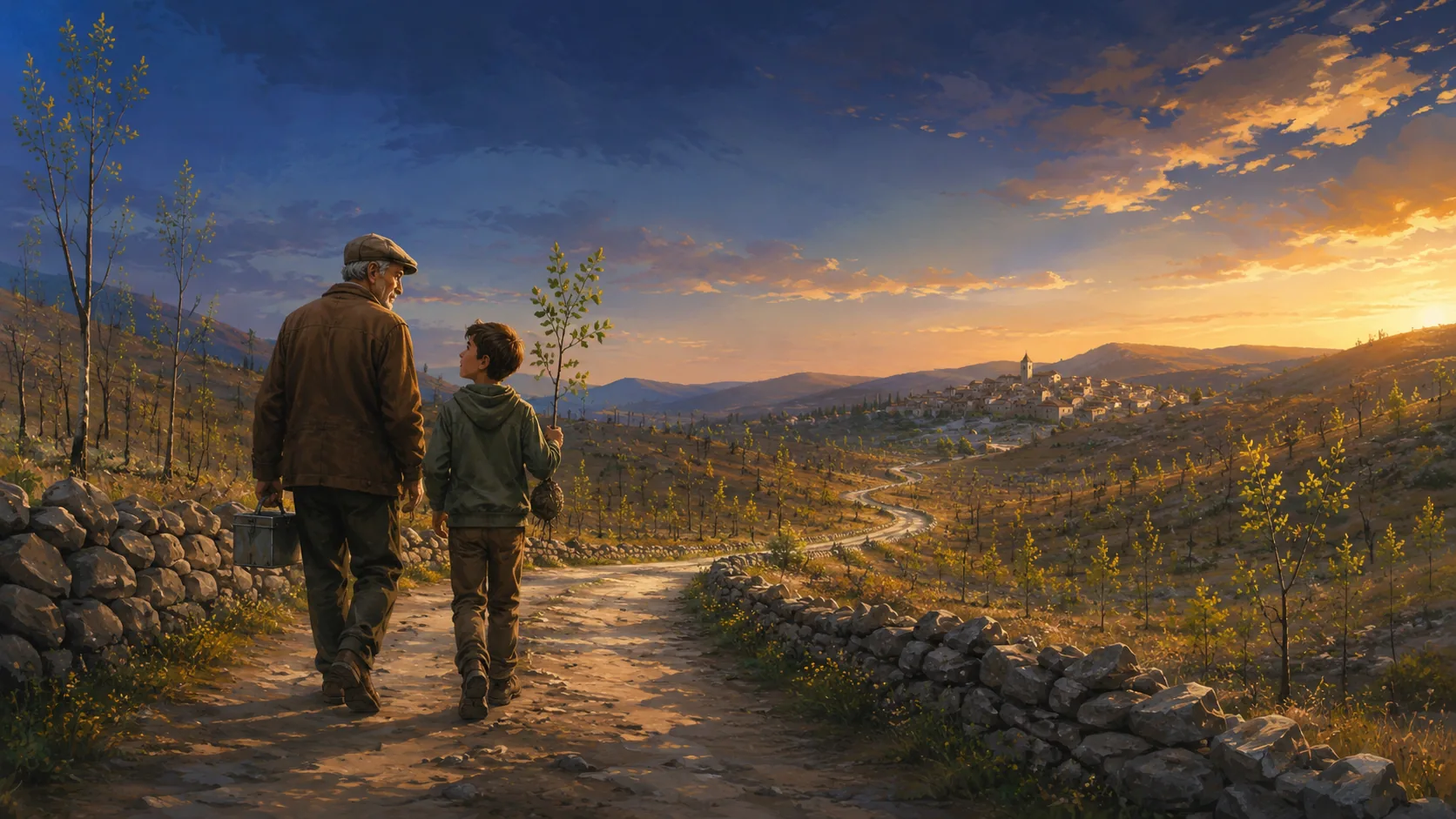
Un vecchio e un bambino camminano su una strada di campagna con semi e un giovane albero
Dove il tempo
mette radici

Ascolta la storia

La lettura vocale non è disponibile in questo browser

Una storia da guardare

La strada che ricordava gli alberi

Un'anteprima cinematografica con immagini animate, musica di sottofondo e parole da seguire lungo il cammino.

01

La collina senza alberi

Nico aveva undici anni e conosceva ogni curva della strada bianca che usciva dal paese. Conosceva il sasso a forma di tartaruga, il cancello che cigolava anche quando non c'era vento e il punto esatto in cui il telefono smetteva di prendere. Non conosceva, invece, la collina.

La collina si alzava oltre i campi di grano come una schiena stanca. D'estate era color paglia, d'inverno diventava grigia e, in primavera, si copriva di erba bassa. Non c'era un solo albero.

«Era così anche quando eri bambino?» chiese Nico ad Anselmo, la domenica in cui cominciarono a camminare insieme.

Anselmo non rispose subito. Aveva settantadue anni, un cappello di feltro e l'abitudine di lasciare che le domande riposassero prima di ricevere una risposta.

«No» disse infine. «Quando avevo la tua età, sulla collina c'era un bosco. Non fitto come quelli delle montagne, ma abbastanza grande da far sparire la strada nelle sue ombre.»

Nico si voltò verso il pendio nudo. Cercò di immaginare i tronchi al posto dei cespugli, i rami al posto del cielo aperto, il fruscio delle foglie là dove passava soltanto il vento.

«E dove sono finiti?»

Anselmo indicò una piccola scatola di latta che teneva nella tasca della giacca. «Questa è una storia lunga. Ma possiamo cominciare dal primo passo.»

02

Le parole del paesaggio

Da quella domenica, Nico e Anselmo presero a incontrarsi ogni settimana. Non sempre salivano sulla collina. A volte seguivano il fiume, altre volte si sedevano vicino al vecchio mulino, dove l'acqua aveva imparato a passare anche senza più far girare le pale.

Anselmo raccontava il paesaggio come si racconta una persona: la quercia che teneva fresco il cortile della scuola, i pioppi che segnalavano la riva prima che arrivassero le mappe, il noce sotto il quale suo padre riparava le biciclette.

«Ma come fai a ricordare tutto?» domandò Nico.

«Non ricordo tutto. Ricordo ciò a cui ho dato attenzione.»

Il bambino cominciò allora ad accorgersi di cose che prima attraversava senza vedere. La crepa nel muro dove crescevano due fili d'erba, il nido abbandonato tra i rami bassi, le pietre disposte lungo i campi per non far scivolare la terra quando pioveva.

Un pomeriggio Nico disse: «Se nessuno ricorda una cosa, è come se non fosse mai esistita?»

Anselmo raccolse una foglia secca. «No. Ma diventa più difficile ritrovarne la strada. Per questo raccontiamo.»

«La memoria non è una fotografia appesa al muro. È un sentiero: se lo percorri, resta visibile.»
03

La scatola di latta

Una domenica di vento, Anselmo aprì finalmente la scatola. Dentro c'erano semi piccoli e scuri, avvolti in un pezzo di carta ormai morbido agli angoli.

«Sono semi di roverella» spiegò. «Li raccolsi molti anni fa, quando abbatterono gli alberi della collina per allargare la strada.»

Nico strinse gli occhi. «Perché non li hai piantati?»

Anselmo guardò il paese in lontananza. «All'inizio pensavo che lo avrebbe fatto qualcun altro. Poi sono arrivati il lavoro, la casa, le giornate che corrono. Dopo un po' ho avuto paura che fosse troppo tardi.»

«Per i semi?»

«Per me.»

Nico non seppe che cosa dire. Anselmo rovesciò un seme sul palmo della mano: pareva una goccia di buio, leggera abbastanza da essere portata via dal vento e ostinata abbastanza da aspettare la stagione giusta.

«Un seme non sa se chi lo pianta vedrà l'albero» disse il vecchio. «Sa soltanto che qualcuno ha scelto di affidargli un domani.»

Nico prese la scatola. «Possiamo piantarli adesso?»

Anselmo sorrise, ma non era ancora un sì. «Possiamo cercare un posto che accetti di aspettare.»

04

Il terreno che nessuno voleva

Il posto era una striscia di terra dietro la vecchia stazione. Un tempo vi passavano i carri merci; ora vi cresceva solo un rovo, con le rotaie nascoste sotto la polvere.

Nico andò a chiedere permesso alla signora Ada, che abitava nella casa più vicina. Ada ascoltò la proposta con le braccia conserte.

«Qui?» disse. «È un terreno dimenticato.»

«Proprio per questo» rispose Nico. «Potremmo ricordargli a che cosa serve.»

La signora Ada non promise niente, ma il giorno dopo arrivò con una zappa. Poi venne il maestro di Nico, con una pila di vecchi secchi. Poi due sorelle che non parlavano quasi mai tra loro e che, per scegliere dove piantare il primo albero, finirono per ridere come quando erano bambine.

Anselmo aveva portato la sua scatola. Distribuì i semi senza tenerne nemmeno uno per sé.

«Non ne piantiamo uno solo?» chiese Nico.

«Un albero ha bisogno di compagnia. Anche le promesse.»

Scavarono buche piccole, protessero la terra con sassi e scrissero i nomi dei semi su tavolette di legno: non per controllarli, disse Anselmo, ma per ricordarsi di tornare.

Quando ebbero finito, la striscia dietro la stazione sembrava quasi uguale a prima. Ma sotto la terra c'erano ventisette possibilità.

05

Il seme e la tempesta

La prima notte arrivò una tempesta. La pioggia cancellò metà delle tavolette e trascinò via la terra intorno alle buche. Al mattino, Nico corse alla vecchia stazione con il cuore pesante.

«È finita» disse, vedendo i solchi lasciati dall'acqua.

Anselmo si inginocchiò. Con due dita liberò un seme dal fango. «No. È cominciata la parte che non avevamo previsto.»

Ricominciarono. Sistemarono pietre più grandi, aggiunsero terra, rifecero i segni. Nei giorni successivi, qualcuno smise di venire. Il maestro aveva le lezioni, Ada il suo orto, le sorelle il negozio. Nico temette che il terreno tornasse a essere dimenticato.

Anselmo, però, continuò a presentarsi ogni mattina.

«Non ti stanchi?» gli chiese Nico.

«Mi stanco. Ma la stanchezza non è sempre un segnale per fermarsi. A volte è solo il modo in cui il corpo ci ricorda che stiamo facendo qualcosa di importante.»

Passarono due settimane. Una mattina, tra i sassi, comparve una foglia minuscola. Non era più grande dell'unghia di Nico. Il bambino la guardò senza toccarla.

«È un albero?»

«È la sua prima frase» disse Anselmo.

Nico tornò a casa e raccontò tutto a sua madre. Il giorno dopo lei venne alla stazione con una bottiglia d'acqua. Poi venne il padre di un compagno. Poi qualcuno portò una carriola. La tempesta non aveva cancellato la promessa: aveva fatto capire a tutti che una promessa, per restare, ha bisogno di più mani.

06

La strada verde

Gli anni non trasformano il mondo in una sola notte. Lo fanno con pazienza, quasi di nascosto.

Il primo inverno morirono quattro piantine. La primavera dopo, altre tre. Ma le restanti crebbero. Prima furono steli, poi rami sottili, poi alberi capaci di tenere un poco d'ombra.

Nico imparò a misurare il tempo con le loro foglie. A tredici anni ne contava venti. A quindici, la strada dietro la stazione aveva già un margine verde. Anselmo camminava più lentamente, ma non smise mai di arrivare fino all'ultima curva.

Un giorno Nico lo trovò seduto sotto il primo albero, quello nato dal seme che aveva liberato dal fango.

«Adesso la collina si vede da qui» disse il ragazzo.

«La collina si è sempre vista. Siamo noi che abbiamo imparato a guardarla.»

Molto tempo dopo, quando Nico accompagnò sua figlia sulla strada bianca, la bambina gli chiese se gli alberi fossero sempre stati lì.

Nico sorrise. Le raccontò della collina spoglia, della scatola di latta e di un vecchio che aveva avuto paura di essere arrivato tardi. Le raccontò della tempesta e delle persone che erano tornate a prendersi cura di una promessa quasi invisibile.

Poi raccolse una ghianda e la mise nella mano della bambina.

«A che cosa serve?» chiese lei.

«A ricordarci che non tutto ciò che amiamo è già grande. Alcune cose hanno bisogno che noi crediamo in loro prima di poterle vedere.»

Dietro di loro, il vento passò tra le chiome giovani. Non era il vento dei ricordi di Anselmo e non era ancora quello dei racconti di Nico. Era un suono nuovo, nato dall'incontro tra ciò che era stato e ciò che poteva diventare.

Per restare tra radici, lavoro e seconde possibilità, leggi anche Il nome sul legno.

Ricordare non significa riportare indietro il mondo. Significa scegliere ciò che merita di continuare a vivere, e consegnarlo a mani che ancora non conosciamo.

Ogni futuro comincia con qualcuno che pianta un seme nella terra del presente.
English translation

The Road That Remembered the Trees

Nico believes the hill has always been bare. Anselmo remembers when the wind passed through an entire forest. Together they learn that the past does not ask to be mourned: it asks to become care.

01

The bare hill

Nico was eleven and knew every curve of the white road that left the village. He knew the stone shaped like a turtle, the gate that creaked even when there was no wind, and the exact place where the phone stopped getting a signal. He did not know the hill, however.

The hill rose beyond the wheat fields like a tired back. In summer it was straw-colored, in winter it turned gray, and in spring it was covered with short grass. There was not a single tree.

“Was it like this when you were a child?” Nico asked Anselmo, on the Sunday when they began walking together.

Anselmo did not answer at once. He was seventy-two, wore a felt hat, and had a habit of letting questions rest before giving them an answer.

“No,” he said at last. “When I was your age, there was a forest on the hill. It was not as thick as a mountain forest, but large enough to make the road disappear into its shadows.”

Nico turned toward the bare slope. He tried to imagine trunks in place of bushes, branches in place of the open sky, and the rustle of leaves where only the wind passed.

“Where did they go?”

Anselmo pointed to a small tin box in his jacket pocket. “That is a long story. But we can begin with the first step.”

02

The words of the landscape

From that Sunday on, Nico and Anselmo met every week. They did not always climb the hill. Sometimes they followed the river; other times they sat near the old mill, where the water had learned to pass even without turning the wheels.

Anselmo described the landscape as one describes a person: the oak that kept the schoolyard cool, the poplars that marked the riverbank before maps arrived, the walnut tree beneath which his father repaired bicycles.

“How do you remember everything?” Nico asked.

“I do not remember everything. I remember what I paid attention to.”

The boy then began to notice things he had crossed without seeing before: the crack in the wall where two blades of grass grew, the abandoned nest among the low branches, the stones arranged along the fields to keep the earth from slipping when it rained.

One afternoon Nico said, “If no one remembers something, is it as if it never existed?”

Anselmo picked up a dry leaf. “No. But it becomes harder to find the road back to it. That is why we tell stories.”

Memory is not a photograph hanging on a wall. It is a path: if you walk it, it remains visible.
03

The tin box

On a windy Sunday, Anselmo finally opened the box. Inside were small, dark seeds wrapped in a piece of paper that had grown soft at the corners.

“They are downy oak seeds,” he explained. “I collected them many years ago, when they cut down the trees on the hill to widen the road.”

Nico narrowed his eyes. “Why didn't you plant them?”

Anselmo looked at the village in the distance. “At first I thought someone else would do it. Then work came, and the house, and days that ran too fast. After a while I was afraid it was too late.”

“For the seeds?”

“For me.”

Nico did not know what to say. Anselmo tipped one seed into his palm: it looked like a drop of darkness, light enough to be carried away by the wind and stubborn enough to wait for the right season.

“A seed does not know whether the person who plants it will see the tree,” said the old man. “It only knows that someone chose to entrust it with a tomorrow.”

Nico took the box. “Can we plant them now?”

Anselmo smiled, but it was not yet a yes. “We can look for a place willing to wait.”

04

The land no one wanted

The place was a strip of land behind the old station. Once freight carts had passed there; now only a bramble grew, with the rails hidden beneath the dust.

Nico went to ask permission from Mrs. Ada, who lived in the nearest house. Ada listened to the proposal with her arms folded.

“Here?” she said. “This is forgotten land.”

“Exactly because of that,” Nico replied. “We could remind it what it is for.”

Mrs. Ada promised nothing, but the next day she arrived with a hoe. Then Nico's teacher came with a stack of old buckets. Then two sisters who hardly ever spoke to each other came, and while choosing where to plant the first tree, they ended up laughing as they had when they were children.

Anselmo had brought his box. He handed out the seeds without keeping even one for himself.

“We are not planting just one?” Nico asked.

“A tree needs company. So do promises.”

They dug small holes, protected the soil with stones, and wrote the names of the seeds on wooden tablets—not to control them, Anselmo said, but to remember to come back.

When they finished, the strip behind the station looked almost the same as before. But beneath the soil were twenty-seven possibilities.

05

The seed and the storm

The first night a storm arrived. The rain erased half the tablets and dragged the earth away from the holes. In the morning, Nico ran to the old station with a heavy heart.

“It is over,” he said, seeing the tracks left by the water.

Anselmo knelt down. With two fingers he freed a seed from the mud. “No. The part we did not expect has begun.”

They started again. They set larger stones, added soil, and remade the markers. In the days that followed, some people stopped coming. The teacher had lessons, Ada had her garden, and the sisters had the shop. Nico feared the land would be forgotten again.

Anselmo, however, continued to arrive every morning.

“Don't you get tired?” Nico asked him.

“I do. But tiredness is not always a signal to stop. Sometimes it is simply the way the body reminds us that we are doing something important.”

Two weeks passed. One morning, among the stones, a tiny leaf appeared. It was no larger than Nico's fingernail. The boy looked at it without touching it.

“Is it a tree?”

“It is its first sentence,” Anselmo said.

Nico went home and told his mother everything. The next day she came to the station with a bottle of water. Then a classmate's father came. Then someone brought a wheelbarrow. The storm had not erased the promise: it had shown everyone that a promise, to remain, needs more hands.

06

The green road

Years do not transform the world in a single night. They do it patiently, almost in secret.

The first winter, four saplings died. The following spring, three more. But the rest grew. First they were stems, then thin branches, then trees capable of holding a little shade.

Nico learned to measure time by their leaves. At thirteen he counted twenty. At fifteen, the road behind the station already had a green edge. Anselmo walked more slowly, but he never stopped reaching the last bend.

One day Nico found him sitting beneath the first tree, the one that had grown from the seed he had freed from the mud.

“Now the hill can be seen from here,” the boy said.

“The hill has always been visible. We are the ones who learned how to look at it.”

Much later, when Nico took his daughter along the white road, the girl asked whether the trees had always been there.

Nico smiled. He told her about the bare hill, the tin box, and an old man who had been afraid he had arrived too late. He told her about the storm and the people who had returned to care for an almost invisible promise.

Then he picked up an acorn and placed it in the girl's hand.

“What is it for?” she asked.

“To remind us that not everything we love is already large. Some things need us to believe in them before we can see them.”

Behind them, the wind passed through the young treetops. It was not the wind of Anselmo's memories and not yet the wind of Nico's stories. It was a new sound, born from the meeting between what had been and what could become.

Remembering does not mean bringing the world back. It means choosing what deserves to keep living, and handing it on to hands we do not yet know.

Every future begins with someone planting a seed in the soil of the present.

La tua impressione

Come hai trovato questa storia?

Lascia una valutazione da una a cinque stelle per aiutare altri lettori a scegliere il loro prossimo racconto.

Valuta La strada che ricordava gli alberi da una a cinque stelle

Scegli da una a cinque stelle.

La scelta viene ricordata su questo dispositivo.

Il viaggio continua

Altre storie da custodire

Scelti per te

Tre racconti vicini per tema, atmosfera e significato