Cantastoriememorie · emozioni · tradizioni Torna ai racconti

Racconto · 8 min di lettura

La salita di Marta

Una giovane atleta senza mezzi riceve l’occasione della vita e scopre che il traguardo più importante comincia molto prima della gara.

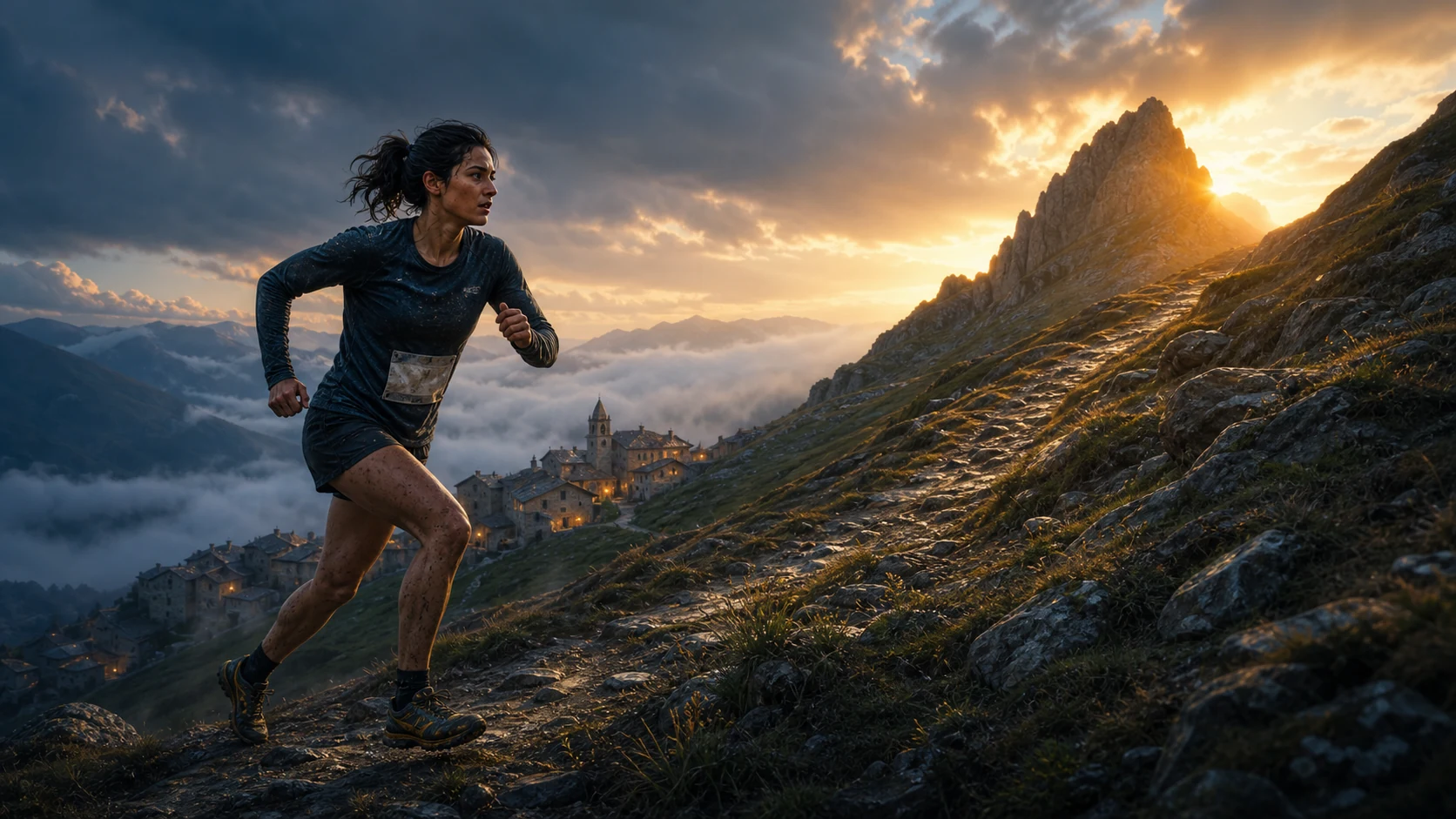
Marta corre su un ripido sentiero di montagna mentre l’alba illumina la vetta e il paese nella valle
Ogni alba
era già un traguardo

Ascolta la storia

La lettura vocale non è disponibile in questo browser
01

La strada prima dell’alba

Alle cinque del mattino, Pietraviva era ancora un mucchio di tetti neri sotto la montagna.

Marta Riva usciva dal retro dell’albergo con l’odore del detersivo addosso e quaranta euro guadagnati piegando lenzuola per tutta la notte. Mentre il paese dormiva, lei stringeva i lacci delle scarpe rattoppate e cominciava a correre.

La sua strada saliva fino alla Croce del Falco: nove chilometri di pietre, radici e tornanti, con quasi duemila metri di dislivello. I turisti impiegavano un giorno intero per arrivare in cima. Marta, quando le gambe giravano bene, meno di due ore.

Non aveva un allenatore né un orologio sportivo. Per misurare il tempo usava la campana della chiesa: partiva al rintocco delle cinque e controllava quante volte avesse suonato quando tornava in paese.

Correva perché lassù nessuno le chiedeva l’affitto arretrato. Nessuno le ricordava che, a ventotto anni, avrebbe dovuto cercarsi un lavoro vero. Sulla montagna non era la ragazza che lavorava di notte e contava le monete davanti al supermercato.

Era soltanto Marta, il suo respiro e la salita.

02

Il numero quarantasette

Un lunedì di settembre trovò ad aspettarla davanti all’albergo un uomo con una giacca rossa e un taccuino in mano.

«Sei tu quella che corre fino alla Croce?»

Marta lo guardò con diffidenza. «Dipende. Ho fatto qualcosa di illegale?»

L’uomo rise e le porse un volantino. Si chiamava Leone Bassi ed era l’organizzatore della Corsa del Gigante, la gara di montagna più importante del Paese. Quell’anno, per la prima volta, la competizione sarebbe partita proprio da Pietraviva.

Il manifesto mostrava atleti sorridenti, sponsor e un montepremi che a Marta sembrò irreale.

«Ci serve una concorrente locale» spiegò Leone. «Qualcuno che conosca questa montagna. Il paese ha fatto il tuo nome.»

Marta osservò ancora la cifra stampata in fondo alla pagina. Con il premio avrebbe potuto pagare i debiti, cambiare le scarpe, forse perfino smettere di fare i turni di notte.

«Non ho mai partecipato a una gara vera.»

«Allora sarà la tua prima.»

Accettò prima che la paura riuscisse a suggerirle una risposta diversa.

«Non temeva di perdere. Temeva di dimostrare che tutti quelli che avevano riso avevano ragione.»

La notizia fece il giro del paese in poche ore. Qualcuno le offrì un caffè. Altri scommisero che si sarebbe ritirata prima del quinto chilometro.

Il favorito della corsa era Viktor Saren, campione europeo e detentore del record del percorso. Arrivò a Pietraviva con un fisioterapista, un addetto stampa e una valigia piena di scarpe. Quando incontrò Marta durante la presentazione ufficiale, le strinse la mano senza riconoscerla.

«Sei dello staff?» le domandò.

«No. Corro.»

Viktor la studiò per un istante, poi sorrise come si sorride a un bambino che ha appena detto di voler diventare astronauta.

03

Imparare la salita

Da quel giorno Marta si allenò nel tempo che riusciva a strappare al lavoro. Correva all’alba, dormiva tre ore, poi raggiungeva Arturo, il vecchio falegname del paese che da ragazzo aveva partecipato alle prime gare alpine.

Arturo non possedeva diplomi da allenatore. Aveva però occhi capaci di accorgersi di ogni errore.

«Sali troppo in fretta» le ripeteva. «Una montagna non si conquista. Si ascolta.»

Le insegnò a risparmiare le gambe, a mangiare anche quando lo stomaco si chiudeva, a riconoscere il momento in cui il dolore era soltanto paura e quello in cui diventava un avvertimento.

Gli sponsor le regalarono una maglia, ma nessuno volle pagarle le scarpe. Così Arturo organizzò una colletta. Il fornaio mise venti euro, la farmacista trenta, i bambini della scuola rovesciarono sul bancone un barattolo pieno di monete.

Marta comprò il suo primo paio di scarpe da gara.

La notte prima della partenza non riuscì a dormire. Seduta sul pavimento della cucina, ascoltò il vento battere contro le finestre e pensò di ritirarsi.

Poi vide le scarpe nuove accanto alla porta. Non erano soltanto sue. Appartenevano a ogni persona che aveva messo una moneta in quel barattolo.

04

Ascoltare la montagna

All’alba, Pietraviva era piena di bandiere e telecamere. Sulla linea di partenza Marta si trovò accanto a professionisti arrivati da dodici Paesi. Avevano muscoli asciutti, divise perfette e nomi stampati sulle borracce.

Lei aveva il numero 47 appuntato storto sulla maglia.

Al colpo di pistola, Viktor partì come se volesse staccare tutti nei primi cento metri. Marta sentì l’istinto urlarle di seguirlo.

Poi ricordò le parole di Arturo.

Ascolta la montagna.

Lasciò andare il gruppo di testa.

Al terzo chilometro era venticinquesima. Al quinto, diciassettesima. Quando il sentiero entrò nel bosco, cominciò a recuperare. Conosceva ogni pietra e ogni curva. Sapeva dove il terreno cedeva e dove, dietro i cespugli, si nascondeva una striscia di terra compatta.

Al rifugio delle Aquile era sesta.

Poi arrivò la pioggia.

Cadde improvvisa, fitta e gelida. Il sentiero diventò fango. Diversi atleti rallentarono. Uno scivolò e si ritirò. Marta continuò, ma al dodicesimo chilometro sentì una fitta al polpaccio.

Per qualche minuto corse zoppicando.

Viktor era ancora davanti, invisibile nella nebbia. Il premio, i debiti e le speranze del paese si allontanavano a ogni passo.

Marta si fermò. Appoggiò le mani sulle ginocchia e fissò il terreno. Avrebbe potuto tornare indietro. Nessuno l’avrebbe biasimata: era arrivata più lontano del previsto.

Poi, dal basso, udì il suono della campana di Pietraviva.

Un rintocco. Un altro.

La stessa campana che per anni aveva misurato i suoi allenamenti solitari.

Marta raddrizzò la schiena e ripartì.

«Non pensò più al traguardo. Scelse una pietra e la raggiunse. Poi un albero. Poi il tornante successivo.»

Superò la quinta concorrente. Poi la quarta.

A due chilometri dalla vetta vide Viktor. Il campione avanzava lentamente, sfinito dallo sforzo iniziale. Quando Marta gli arrivò accanto, lui si voltò incredulo.

Per un centinaio di metri corsero insieme, spalla contro spalla.

Poi il sentiero si divise intorno a una parete di roccia. Viktor scelse il passaggio più largo. Marta prese quello ripido, quasi nascosto nella nebbia. Era più difficile, ma il terreno drenava meglio.

La montagna le aveva indicato la strada.

05

Undici secondi

Quando raggiunse il prato della Croce, mancavano trecento metri. Le gambe non le appartenevano più. Il pubblico urlava il suo nome, ma Marta sentiva soltanto il proprio respiro.

Viktor riapparve alle sue spalle.

Marta pensò alle notti trascorse a piegare lenzuola. Alle bollette sul tavolo. Alle monete dei bambini. A tutte le volte in cui aveva corso senza che nessuno la vedesse.

Capì che l’occasione della vita non era quella gara.

Erano state tutte quelle mattine in cui avrebbe potuto restare a letto e invece aveva scelto la salita.

Fece l’ultimo passo oltre il traguardo e cadde sull’erba.

Per qualche secondo non seppe se avesse vinto. Poi la campana del paese cominciò a suonare senza fermarsi.

Marta aveva preceduto Viktor di undici secondi.

Qualche mese dopo, con il premio pagò i debiti e lasciò il turno di notte. Affittò una piccola stanza sopra la falegnameria di Arturo e la trasformò in una palestra per i ragazzi di Pietraviva.

Sulla parete appese il numero 47, ancora macchiato di fango.

Quando qualcuno le chiedeva quale fosse stato il segreto della sua vittoria, Marta sorrideva.

Per continuare tra fatica, radici e futuro, leggi anche La strada che ricordava gli alberi.

«Non ho sconfitto la montagna» rispondeva. «Ho solo imparato a non smettere di salire.»

Perché le occasioni cambiano una vita soltanto quando incontrano tutti i passi compiuti prima che arrivassero.

English translation

Marta’s Climb

A young athlete with barely enough to live on gets the chance of a lifetime and discovers that the most important finish line begins long before race day.

01

The road before dawn

At five in the morning, Pietraviva was still a cluster of black roofs beneath the mountain.

Marta Riva slipped out through the back door of the hotel with the smell of detergent clinging to her and forty euros earned from folding sheets through the night. While the village slept, she tightened the laces of her patched-up shoes and began to run.

Her route climbed to the Croce del Falco: nine kilometres of stones, roots, and hairpin bends, with almost two thousand metres of elevation gain. Tourists took an entire day to reach the summit. Marta, when her legs were working well, took less than two hours.

She had no coach and no sports watch. She used the church bell to measure her time: she left on the five o’clock chime and counted how many times it had rung by the time she returned to the village.

She ran because up there no one asked about her overdue rent. No one reminded her that, at twenty-eight, she ought to find a proper job. On the mountain she was not the girl who worked nights and counted her coins before entering the supermarket.

She was simply Marta, her breath, and the climb.

02

Number forty-seven

One Monday in September, she found a man in a red jacket waiting for her outside the hotel, a notebook in his hand.

‘Are you the one who runs up to the Cross?’

Marta eyed him warily. ‘It depends. Have I done something illegal?’

The man laughed and handed her a leaflet. His name was Leone Bassi, and he organised the Giant’s Race, the country’s most important mountain-running competition. That year, for the first time, the race would start in Pietraviva itself.

The poster showed smiling athletes, sponsors, and a prize fund that seemed unreal to Marta.

‘We need a local runner,’ Leone explained. ‘Someone who knows this mountain. The village put your name forward.’

Marta looked again at the figure printed at the bottom of the page. With the prize money, she could pay her debts, replace her shoes, perhaps even give up the night shifts.

‘I’ve never entered a real race.’

‘Then this will be your first.’

She accepted before fear could suggest a different answer.

The news travelled through the village within hours. Some people bought her a coffee. Others wagered that she would pull out before the fifth kilometre.

The favourite was Viktor Saren, the European champion and course-record holder. He arrived in Pietraviva with a physiotherapist, a press officer, and a suitcase full of shoes. When he met Marta at the official presentation, he shook her hand without recognising her.

‘Are you part of the staff?’ he asked.

‘No. I’m racing.’

Viktor studied her for a moment, then smiled the way people smile at a child who has just announced plans to become an astronaut.

She was not afraid of losing. She was afraid of proving that everyone who had laughed was right.
03

Learning the climb

From that day on, Marta trained in every scrap of time she could wrest from work. She ran at dawn, slept for three hours, then went to see Arturo, the village’s old carpenter, who had competed in some of the earliest alpine races when he was young.

Arturo had no coaching qualifications. But he had eyes that noticed every mistake.

‘You climb too fast,’ he kept telling her. ‘A mountain is not conquered. It is listened to.’

He taught her to conserve her legs, to eat even when her stomach closed up, and to recognise the moment when pain was only fear and the moment when it became a warning.

The sponsors gave her a racing top, but no one would pay for her shoes. So Arturo organised a collection. The baker put in twenty euros, the pharmacist thirty, and the schoolchildren tipped a jar full of coins onto the counter.

Marta bought her first pair of racing shoes.

The night before the start, she could not sleep. Sitting on the kitchen floor, she listened to the wind striking the windows and thought about withdrawing.

Then she saw the new shoes beside the door. They were not hers alone. They belonged to every person who had placed a coin in that jar.

04

Listening to the mountain

At dawn, Pietraviva was filled with flags and television cameras. On the starting line, Marta stood beside professionals from twelve countries. They had lean muscles, flawless uniforms, and names printed on their water bottles.

She had number 47 pinned crookedly to her shirt.

At the crack of the starting pistol, Viktor surged forward as though he meant to leave everyone behind in the first hundred metres. Every instinct in Marta screamed at her to follow him.

Then she remembered Arturo’s words.

Listen to the mountain.

She let the leading group go.

At the third kilometre, she was twenty-fifth. At the fifth, seventeenth. When the trail entered the woods, she began to gain ground. She knew every stone and every turn. She knew where the earth gave way and where, behind the bushes, a strip of firm ground lay hidden.

By the Eagle Refuge, she was sixth.

Then the rain came.

It fell without warning, hard and icy. The trail turned to mud. Several runners slowed. One slipped and withdrew. Marta carried on, but at the twelfth kilometre a sharp pain seized her calf.

For several minutes, she ran with a limp.

Viktor was still ahead, invisible in the mist. The prize, the debts, and the village’s hopes seemed to recede with every step.

Marta stopped. She put her hands on her knees and stared at the ground. She could have turned back. No one would have blamed her: she had already gone farther than anyone expected.

Then, from below, she heard the bell of Pietraviva.

One chime. Then another.

The same bell that had measured years of solitary training.

Marta straightened her back and began again.

She passed the runner in fifth place. Then the runner in fourth.

Two kilometres from the summit, she saw Viktor. The champion was moving slowly, drained by his early effort. When Marta drew level with him, he turned to her in disbelief.

For a hundred metres, they ran together, shoulder to shoulder.

Then the trail split around a rock face. Viktor chose the wider path. Marta took the steep one, almost hidden in the mist. It was harder, but the ground drained better.

The mountain had shown her the way.

She stopped thinking about the finish. She chose a stone and reached it. Then a tree. Then the next bend in the trail.
05

Eleven seconds

When she reached the meadow below the Cross, three hundred metres remained. Her legs no longer belonged to her. The crowd was shouting her name, but Marta could hear only her own breathing.

Viktor reappeared behind her.

Marta thought about the nights spent folding sheets. The bills on the table. The children’s coins. Every time she had run when no one was there to see her.

She understood that the chance of a lifetime was not that race.

It was every morning when she could have stayed in bed and had chosen the climb instead.

She took the final step across the finish line and fell onto the grass.

For a few seconds, she did not know whether she had won. Then the village bell began to ring without stopping.

Marta had beaten Viktor by eleven seconds.

A few months later, she used the prize money to pay her debts and left the night shift. She rented a small room above Arturo’s workshop and turned it into a gym for the children of Pietraviva.

On the wall, she hung number 47, still stained with mud.

Whenever someone asked the secret of her victory, Marta smiled.

‘I did not defeat the mountain,’ she would say. ‘I simply learned never to stop climbing.’

Because opportunities change a life only when they meet all the steps taken before they arrive.

La tua impressione

Come hai trovato questa storia?

Lascia una valutazione da una a cinque stelle per aiutare altri lettori a scegliere il loro prossimo racconto.

Valuta La salita di Marta da una a cinque stelle

Scegli da una a cinque stelle.

La scelta viene ricordata su questo dispositivo.

Il viaggio continua

Altre storie da custodire

Scelti per te

Tre racconti vicini per tema, atmosfera e significato